

PremiumBespokeArtisanLuxuryTobacco & Cigarette
Tell us about your boxes
Popular Tobacco & Cigarette
our brands keep reordering.
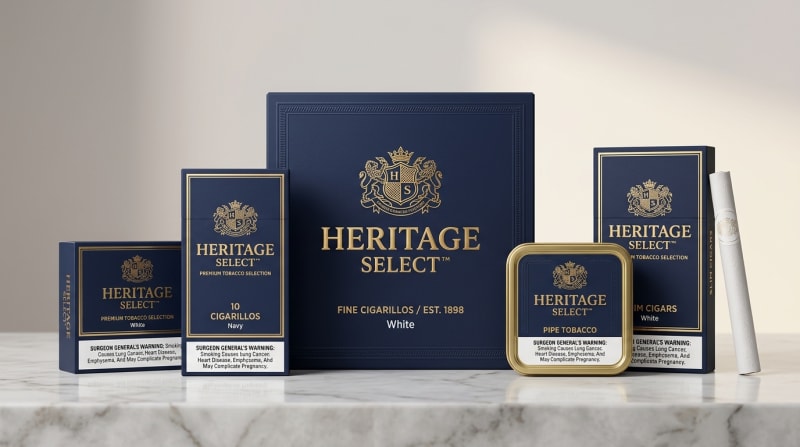
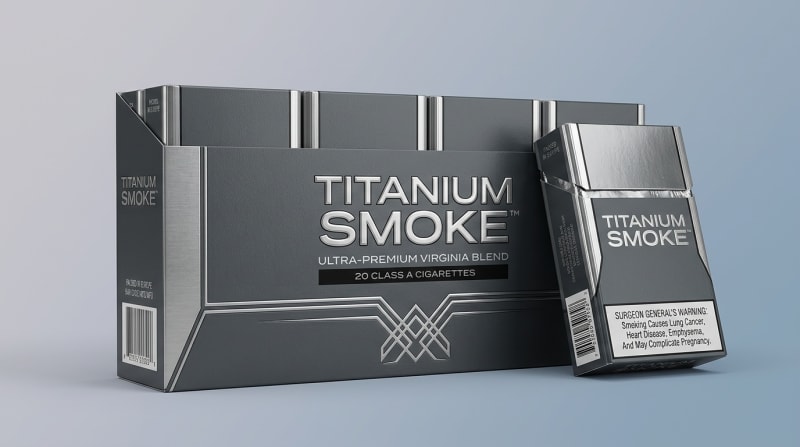
Hand-picked from our tobacco & cigarette range. 6 styles, each built for a different job.




The box is the building.
Inserts are everything else.
Furniture. Bodyguards. Stage crew. The unseen architecture that makes your product feel like it lives somewhere, not like it was just dropped in a box.
Paperboard Inserts
“Engineered paper architecture. Folds, locks, and reveals.”
Foam Inserts
“Soft armor that fits like a glove. Protection without weight.”
Molded Pulp Inserts
“Custom-shaped cradles for products of any silhouette.”
Velvet & Luxury Inserts
“Touch is the unsung sense. Make every reach into the box feel chosen.”
Bottle & Jar Inserts
“Hold the unholdable. Round things, fragile things, things that mustn't spill.”
Eco Inserts
“Plant-based, plastic-free, planet-positive. Compost-ready protection.”
Flexible Protection Inserts
“The unsung heroes of shipping. Soft cushioning that travels well.”
Marketing & Welcome Inserts
“The story slid in beside the product. Printed conversation starters.”
Every finish we offer on Tobacco & Cigarette.
Materials, finishes and add-ons available for this range. Order any of them as a free sample before you commit to a run.
Materials
The board and film we build on
 ◷ ECO
◷ ECO







Finishes
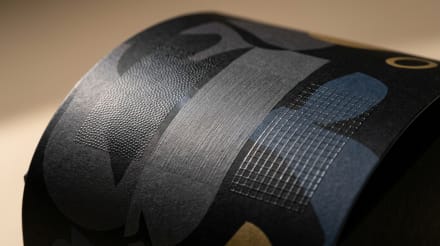
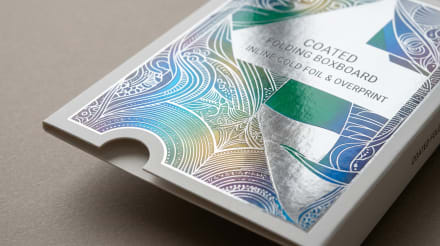
What the surface does in the light



























Add-ons
Closures, linings and the extra touches


Every tobacco category, precisely packaged.
Cigarettes Packaging
Flip-top cartons to market-compliant specifications. Consistent colour across every batch. Multi-market dieline versions on file.
Compliant. Precise. Brand-forward.
Tobacco and cigarette packaging, with the structures, materials, and compliance requirements that govern every box.
Packaging in a compliance-first category
Every design decision starts with the regulatory framework.
Regulation is the brief
Tobacco packaging is among the most tightly regulated categories globally. Plain packaging laws, mandatory graphic warnings, standardised font requirements, and health panel dimensions vary by market, so we map every requirement before design begins.
The brand within the framework
In markets where brand differentiation is permitted, the packaging is the primary brand expression. Colour, finish and structural detail let the box do the work that advertising cannot.
Precision manufacturing
Cigarette cartons are produced to extremely tight tolerances. A sliding box that binds, a hinge that cracks or an inner foil that tears is not acceptable at category volumes. Our production is calibrated to the precision this category demands.
Board and print for high-volume production
The materials that perform at category scale.
Board grades
280–350gsm SBS for standard cigarette cartons. Foil laminated board for premium cigar boxes. Kraft liner for specialist and artisan tobacco products. All board meets relevant food-adjacent material standards.
Offset litho for the colour accuracy and consistency required in regulated categories. All inks meet market-specific regulatory requirements. Colour-matching to brand standards maintained across every production run.
Structural elements
Flip-top hinge, sliding inner tray, soft-pack overwrap, outer carton. Each structural element is produced to tolerance specifications that ensure consistent machine-fillable dimensions.
Every tobacco packaging format
Cigarette carton to cigar case.
Flip-top cartons
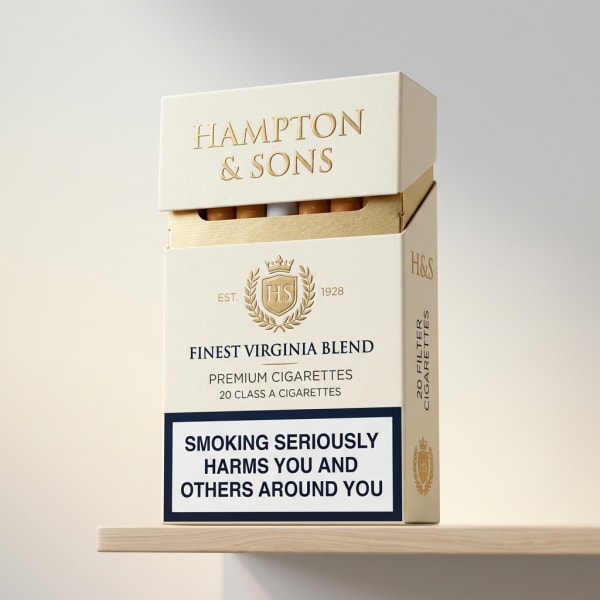
The global standard format for cigarette packaging. Hinge at the back, flip-top lid, inner foil liner. Produced to machine-fillable tolerances. Market-specific warning panels engineered into every dieline.
Sliding box (slide & shell)
Inner tray slides from an outer sleeve. Used for premium cigarettes and specialist tobacco products. The reveal mechanism adds a quality signal at point of use.
Cigar boxes & tubes
Rigid cigar boxes with hinged lids, individual cigar tubes, and band-wrapped packaging. From boutique single-cigar presentation to full-box retail units.
Every tobacco format, one supplier
Cigarettes to premium cigars.
Cigarette brands
Flip-top cartons to market-compliant specifications. Colour accuracy across every batch. Market-specific dieline versions maintained on file for rapid reorder.
Roll-your-own & specialist
Pouch packaging, tuck cartons, and slide-box formats for hand-rolling and specialist tobacco products. Smaller MOQs for limited editions and regional SKUs.
Premium cigars
Rigid boxes, individual tubes, band wrappers, and collector cases. The premium cigar market has the highest packaging quality expectations in the category.
Duty-free & gifting
Premium presentation cartons and gift sets for duty-free and gifting channels. The same product in elevated packaging commands a meaningfully higher price.
From regulatory brief to production
The tobacco packaging supply chain.
01. Market compliance brief
Each target market has specific packaging regulations. We map the mandatory warning panels, fonts, dimensions and batch code areas for every market version before artwork is placed.
02. Tolerance engineering
Machine-fillable cartons require tighter tolerances than standard packaging. We produce pre-production samples for fill-line testing before committing to full production.
03. Production & reorder
Consistent colour, consistent structure, on-time. Reorders run on the same production settings, so there is no colour drift and no dimension creep between batches.
Questions, answered.
In the US, the Surgeon General's warnings, with FDA graphic warning requirements subject to ongoing litigation.
Internationally the picture varies enormously: plain-packaging regimes in Australia and its followers strip branding entirely, mandating a standard drab colour and prescribed typography. Tobacco packaging is regulated more tightly than any other consumer category, and specification starts with the jurisdiction's rulebook rather than the design brief.
The hinged-lid cigarette box, a mid-century structural invention whose one-handed opening and crush protection made it the template for pocket cartons generally.
It is a four-component system: the body blank with a scored hinged lid, a separate inner frame that squares the mouth and gives the lid its landing, a foil-and-paper inner wrap, and a film overwrap with tear tape. The geometry was optimised over decades for filling-line speed and pocket durability.
Because it does four jobs at once: it buffers humidity, breathes with the cigars, imparts the aroma the culture prizes, and deters the tobacco beetle.
Cigars are kept leaves, alive at 65–70% relative humidity, and the box is effectively the humidor's antechamber. No substitute matches all four properties, which is why the wood remains the standard even where cheaper alternatives would serve structurally.
They borrow the structure but carry a different compliance stack.
The flip-top hard pack geometry works equally well for hemp and herbal smokables. What changes is the required content, since cannabis and hemp products carry state symbols, potency, batch identifiers and warnings rather than tobacco's Surgeon General block. Child-resistant construction changes too, because most legal cannabis markets require it and conventional cigarette packs do not provide it.
A tax stamp is a jurisdictional revenue marking, and yes, it needs designated space in the design.
Stamps are applied at pack and often carton level, and their placement is specified by the taxing authority rather than the brand. Designing around them after the fact means either a stamp covering critical content or a redesign, so the requirement should be established at layout stage.
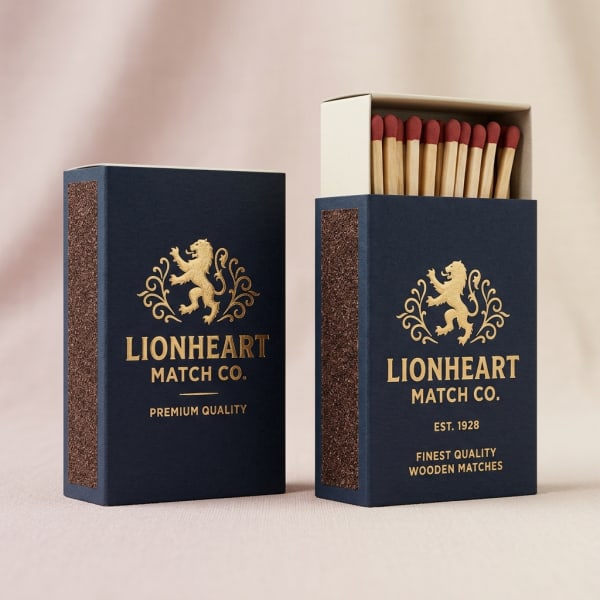
An inner drawer holds the matches, and an outer sleeve carries the print and the striker strip.
It is the original sleeve-and-tray construction, which every drawer box since has borrowed. The striker, a strip of red phosphorus and grit, makes the packaging a tool as well, and its durability is a functional specification: a striker that fails when damp or wears out early fails the product entirely.
Culturally, yes. The cedar cigar box has one of the highest reuse rates of any packaging format.
They become keepsake boxes, craft materials and famously guitars. That second life is worth designing for. A box built to survive its emptiness keeps carrying the brand for years, which is the practical argument for spending on joinery and hardware quality rather than treating the box as disposable.
The floor is 500 units for printed cartons, with production in 7–10 business days.
Tobacco and nicotine packaging is manufactured within licensing and regulatory frameworks, so the compliance position for the specific jurisdiction and product type needs establishing before production. Wooden cigar boxes crossing borders as packaging also require ISPM 15 heat treatment marking.
Your brand deserves
better packaging.
Work one to one with a dedicated packaging manager, from first sketch to delivery.