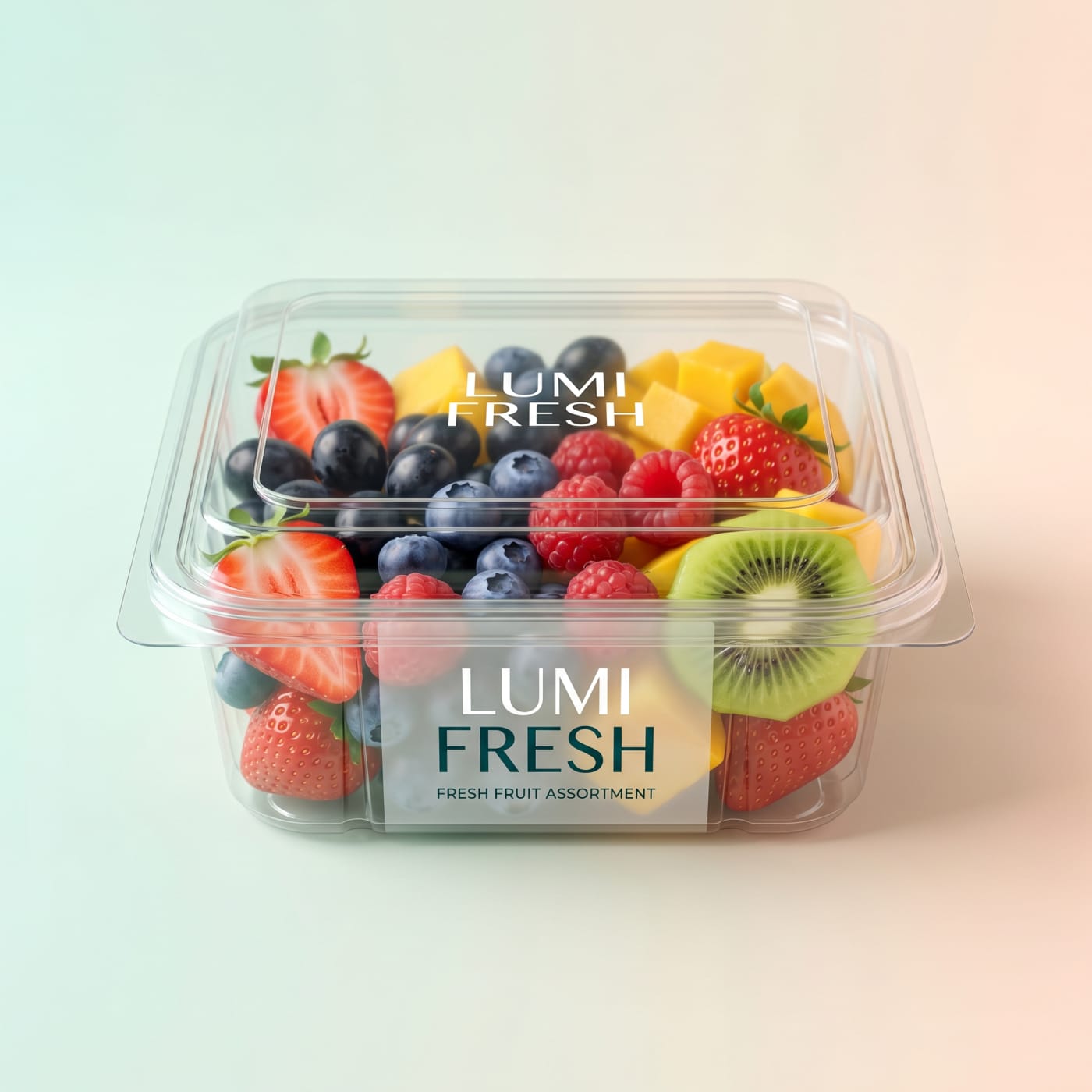
Food Blister Packaging.
Final price depends on size, material, finish and quantity. Your packaging manager confirms it before production.
Your custom box, quoted.
The full specification book.
Six chapters. Six colours. Click a tab to turn the page.
Food Blister Packaging
Blister construction inside food-contact rules, a narrow specification with no shortcuts.
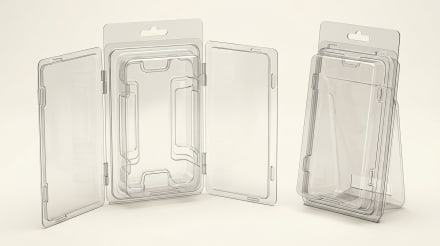
Portioned foods sealed in formed cavities under a lidding film. Every contact surface must be food-grade, and the seal has to survive distribution.
Every detail. Intentional.
Every contact surface is food-safe
Non-negotiable, throughout.
Seal survives distribution
The whole point of the format.
Portion control by cavity
Consistent, countable servings.
Peelable or push-through
Two consumer behaviours.
Barrier by shelf-life target
Film chosen to the date.
Nutrition panel space
Required print, planned in.

Built like architecture.
Every order of Food Blister Packaging is an engineered build, measured, dieline-cut and hand-wrapped to spec. Below is the standard build sheet.
✦ Need a custom spec? Talk to our atelier. Every detail is negotiable.
Every surface, hand-selected.
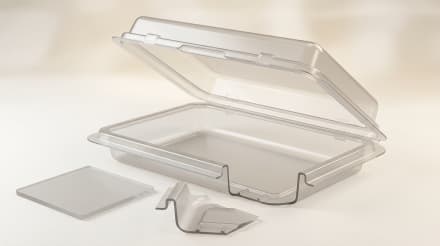
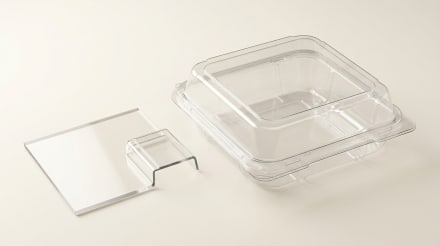
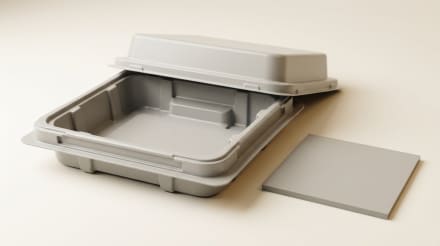
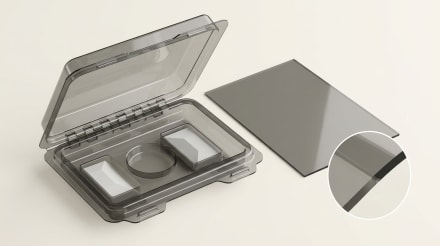
What this product is built from, and the surfaces it takes. Below the build sheet sits the full swatch library. Every option applies across our range, and a physical swatch set is available on request.
Material
The board and paper your box is built from.
 ◷ FINISH
 ◷ FINISH
 ◷ FINISH
 ◷ FINISH
 ◷ FINISH
 ◷ FINISH
 ◷ FINISH
 ◷ FINISH
 ◷ FINISH
Finishes
How the outer surface looks, feels, and catches light.
 ◷ FINISH
 ◷ FINISH
 ◷ FINISH
 ◷ FINISH
 ◷ FINISH
 ◷ FINISH
 ◷ FINISH
 ◷ FINISH
 ◷ FINISH
 ◷ FINISH
 ◷ FINISH
 ◷ FINISH
Add-ons
Closures, linings, and hardware that complete the build.
 ◷ FINISH
 ◷ FINISH
 ◷ FINISH
 ◷ FINISH
 ◷ FINISH
 ◷ FINISH
 ◷ FINISH
 ◷ FINISH
 ◷ FINISH
 ◷ FINISH
 ◷ FINISH
 ◷ FINISH
 ◷ FINISH
 ◷ FINISH
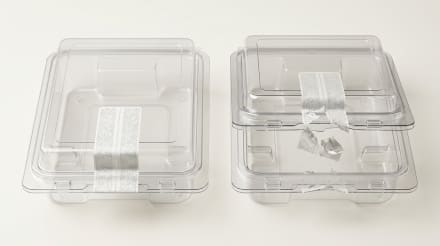 ◷ FINISH
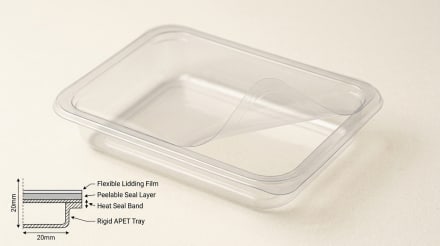 ◷ FINISH
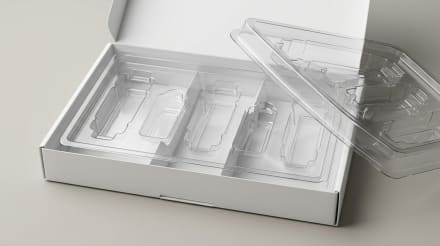 ◷ FINISH
✦ Mix and match across all three and we'll build your exact combination.
The full kit of capabilities.
Sizing & dieline.
We cut Food Blister Packaging to a dieline built around your product instead of pulling a stock size off the shelf. Send us the length, width and height of the item (or the item itself) and we return a measured dieline, free, before you commit to anything.
Length, width and height of the item itself, at its widest points. Measure the product, not the box you happen to use today.
Allow 2–4 mm on each axis for a snug fit, and more if you are adding foam, a pillow insert or tissue.
We quote as Length × Width × Height. Tell us whether you are working in millimetres or inches and we match it.
✦ Not sure of your size? Send us the product and we measure it and build the dieline.
Pricing & minimums.
We price Food Blister Packaging per specification rather than from a fixed list, because the same build in two different finishes can land at very different numbers. Below is what actually moves the price, so you can shape the spec before you request a quote.
The single biggest lever. Unit cost falls sharply as volume rises, because setup and tooling spread across more pieces.
Board weight and stock choice change both the raw material cost and the shipping weight of the finished run.
Foil, spot UV, embossing and soft-touch each add a pass on press. One or two lift the box; five compound the cost.
Full-bleed print inside and out costs more than a one-sided design on natural stock.
Foam, moulded pulp, velvet pillows, magnets and ribbon are priced per piece on top of the box itself.
Standard production is the base rate. Rush moves you up the production queue and carries a surcharge.
✦ Quotes returned within 24 hours.
Questions, answered.
Everything you need to know about Food Blister Packaging.
Use PET or food-grade RPET for chilled and ambient foods, and PP if the pack goes in a microwave. PET gives the clearest view of the food but softens with heat. PP holds its shape at reheating temperatures, which is why sauce pots and ready-meal cavities are usually PP.
Tell us the temperature the pack will see in use and we'll choose a sheet rated for it.
A peelable lid lifts off the flange in one piece, while a push-through lid is a foil the food is pressed through from the cavity side. Peel lids suit dips, sauces and snacks eaten straight from the tray. Push-through suits small solid pieces like mints or gum.
The lidding is tuned to the tray sheet so the seal holds through distribution and still opens by hand.
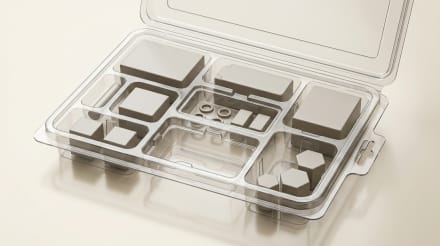
Yes, we form compartmented trays with a separate cavity for each item, the format behind most snack and protein boxes. Every cavity seals under the same lid, so wet and dry foods stay apart until the pack is opened. The cavity volume also fixes the portion, which keeps servings consistent.
Deeper compartments may need a heavier gauge so the walls don't thin out during forming.
Shelf life depends on the barrier of the tray and lid, so we choose the film to suit the date you're targeting. Standard PET works for short chilled life. Barrier laminates slow oxygen and moisture through the walls, and trays can be sealed under modified atmosphere where your line supports it.
Fibre-formed cavities are an option for brands moving off plastic, though their barrier differs, so we'd confirm them against your target date.
Branding goes on the printed backing card or lid, and the food in the clear cavity does most of the selling. We print the card in CMYK and can add spot UV to pick out a logo, while the cavity face stays free of graphics. The card also has room for the nutrition panel.
Leave a clean zone for date and lot codes, which are applied on the packing line.
We size each cavity from the portion it holds, by volume or by the dimensions of the piece, then add a small clearance so the lid seals flat. An overfilled cavity pushes food onto the flange, and that stops the lid sealing properly.
For multi-cavity trays we work from the overall footprint your sealer takes and divide the compartments inside it.
Food blister orders start at 500 units. We run up to 100,000 on a single order, so a pilot batch and a full retail launch can come off the same tooling.
Every sheet and lidding film we use in the order is food-contact grade, whatever the quantity.
Plan on 7 to 10 business days for production after sign-off, or 5 to 7 on a rush. Formed and sealed samples come in 5 to 7 business days so you can run them through your own filling and sealing setup. The fee for samples is deducted from the bulk order.
Other products you might love.

Ready to start your Food Blister Packaging project?
Get a free quote in 24 hours. Our atelier is here to help.