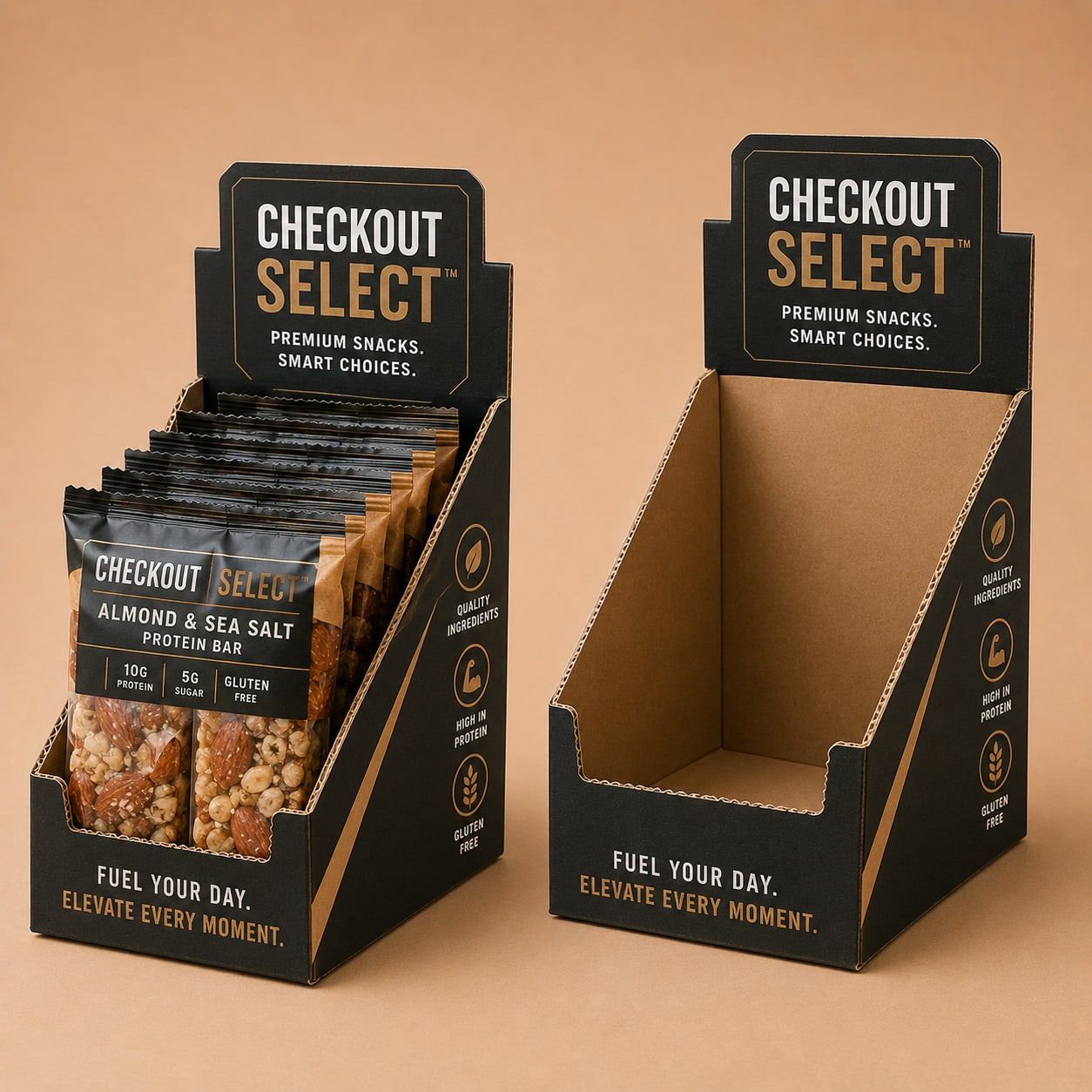
Point of Sale Display Boxes.
Final price depends on size, material, finish and quantity. Your packaging manager confirms it before production.
Your custom box, quoted.
The full specification book.
Six chapters. Six colours. Click a tab to turn the page.
Point of Sale Display Boxes
Sited at the till and sized for the impulse buy, with a small footprint and fast turnover.
Till-point units carry low-price, high-frequency goods. Everything is tuned for quick restocking and a face that reads while someone waits to pay.
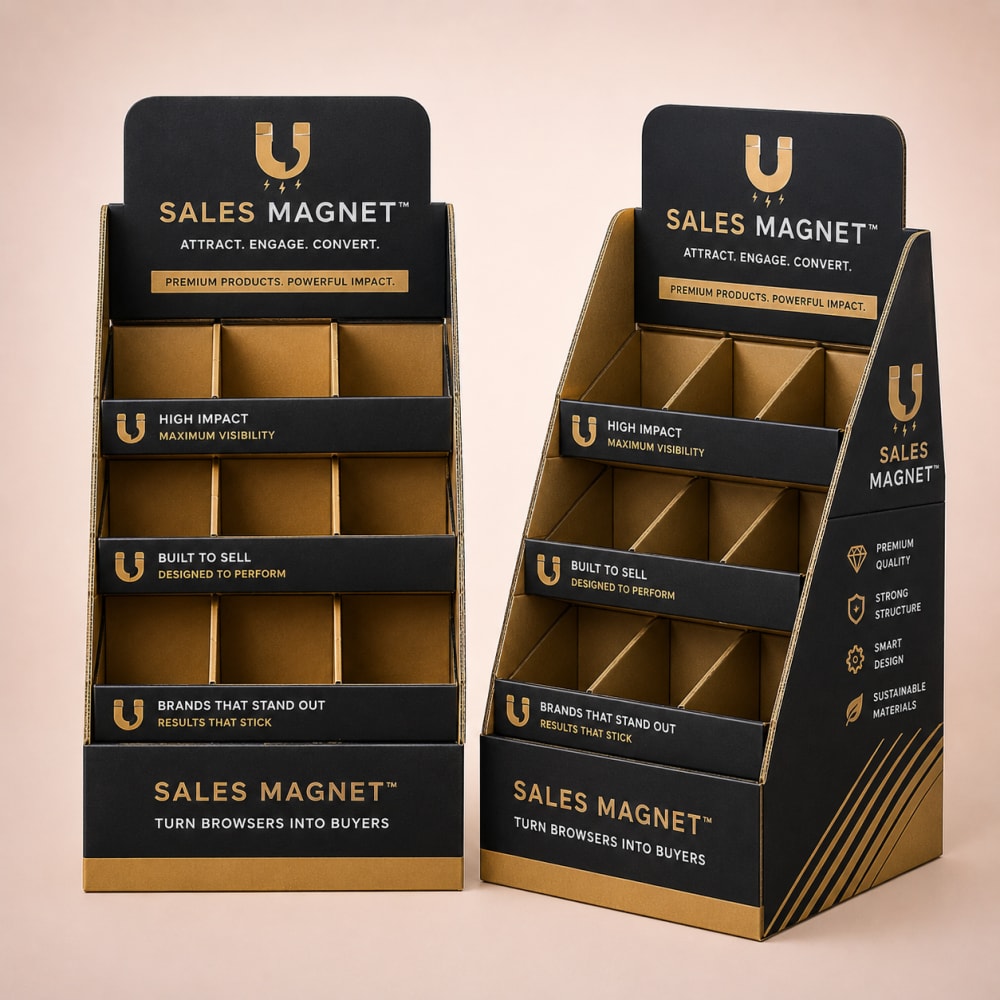
Every detail. Intentional.
Read while waiting to pay
A captive few seconds.
Restocked in one motion
Staff time is the cost.
Low ticket, high frequency
Which sets the unit budget.
Footprint fixed by the till
Rarely negotiable.
Header above the goods
Visible over the merchandise.
Board handles constant touch
Handled and put back constantly.

Built like architecture.
Every order of Point of Sale Display Boxes is an engineered build, measured, dieline-cut and hand-wrapped to spec. Below is the standard build sheet.
✦ Need a custom spec? Talk to our atelier. Every detail is negotiable.
Every surface, hand-selected.
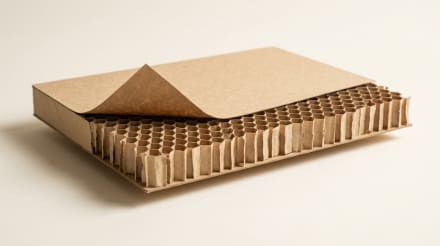
What this product is built from, and the surfaces it takes. Below the build sheet sits the full swatch library. Every option applies across our range, and a physical swatch set is available on request.
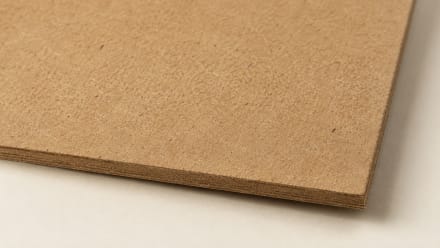
Material
The board and paper your box is built from.
 ◷ ECO
◷ ECO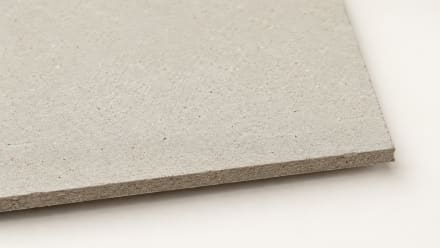 ◷ FINISH
 ◷ FINISH
 ◷ FINISH
 ◷ FINISH
 ◷ FINISH
 ◷ FINISH
 ◷ FINISH
 ◷ FINISH
 ◷ FINISH
 ◷ FINISH
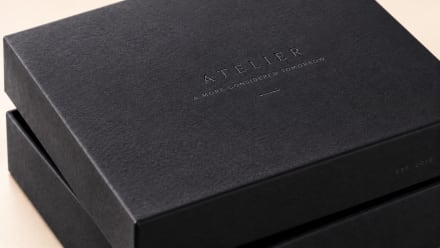
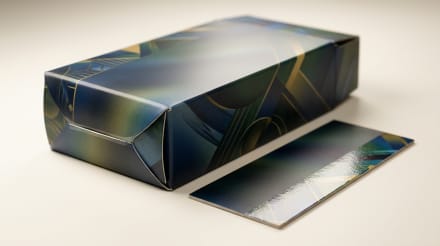
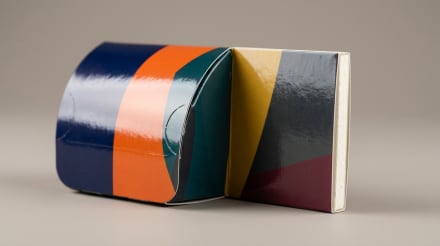
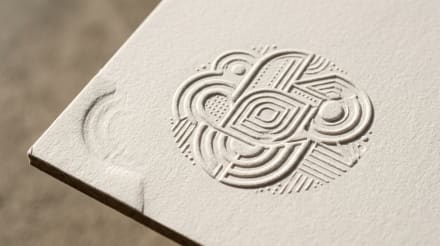
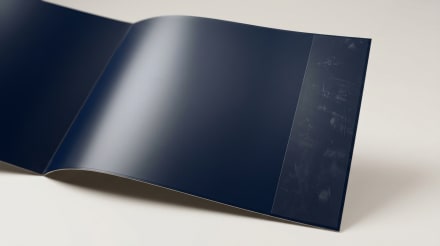
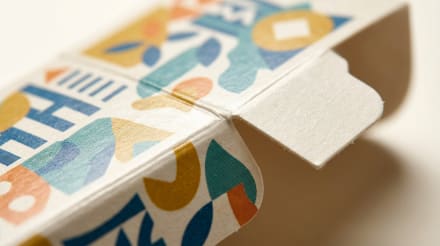
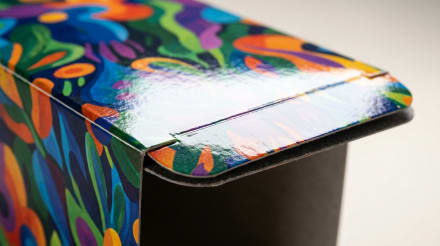
Finishes
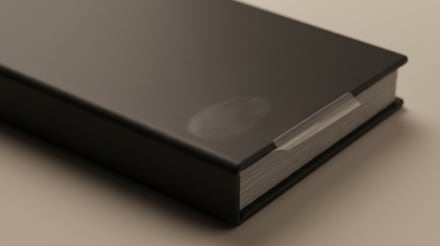
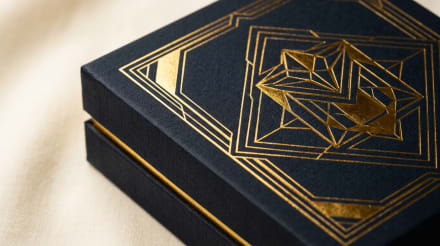
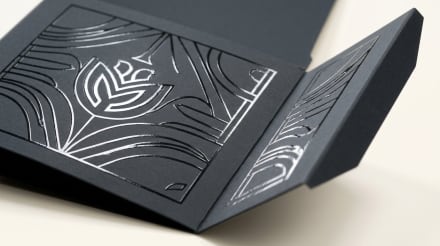
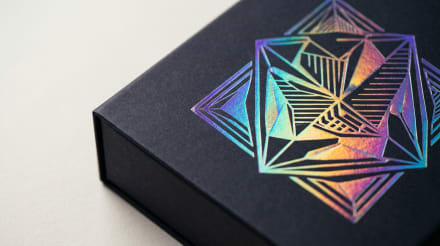
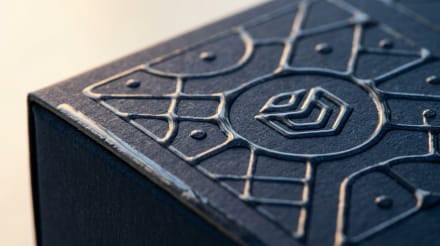
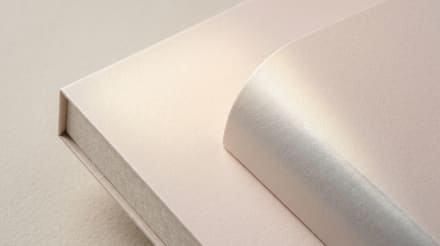
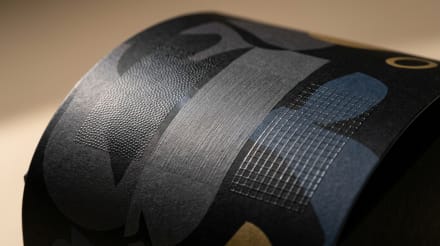
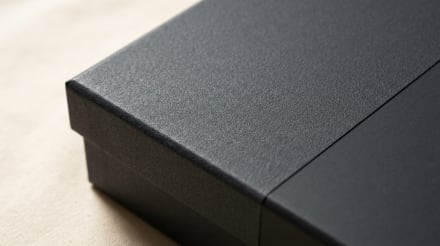
How the outer surface looks, feels, and catches light.
 ◷ FINISH
 ◷ FINISH
 ◷ FINISH
 ◷ FINISH
 ◷ FINISH
 ◷ FINISH
 ◷ FINISH
 ◷ FINISH
 ◷ FINISH
 ◷ FINISH
 ◷ FINISH
 ◷ FINISH
 ◷ FINISH
 ◷ FINISH
 ◷ FINISH
 ◷ FINISH
 ◷ FINISH
 ◷ FINISH
 ◷ FINISH
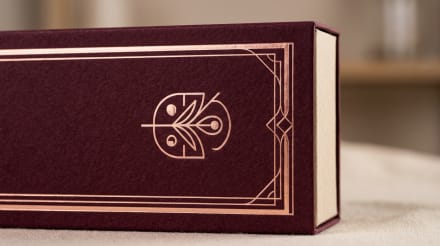 ◷ FINISH
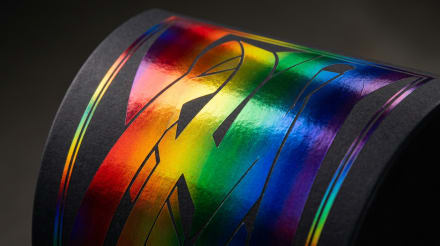 ◷ FINISH
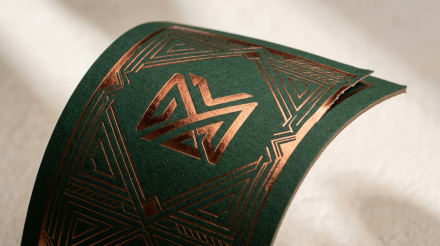 ◷ FINISH
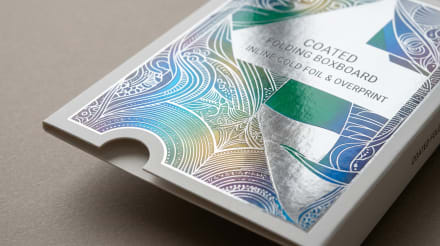 ◷ FINISH
 ◷ FINISH
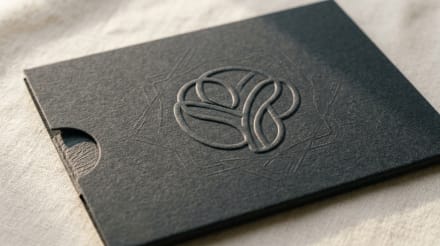 ◷ FINISH
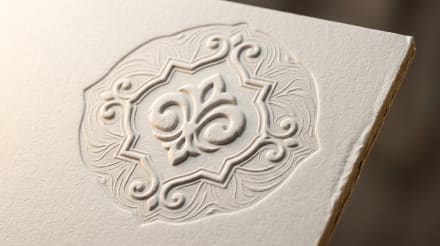 ◷ FINISH
 ◷ FINISH
 ◷ FINISH
 ◷ FINISH
Add-ons
Closures, linings, and hardware that complete the build.
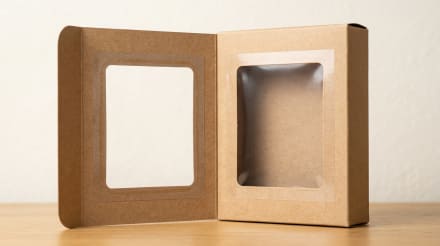 ◷ FINISH
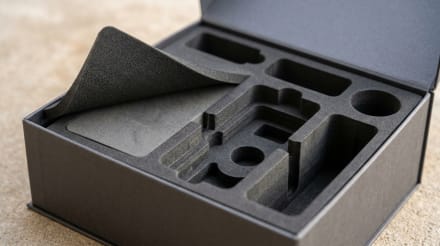 ◷ FINISH
 ◷ FINISH
 ◷ FINISH
✦ Mix and match across all three and we'll build your exact combination.
The full kit of capabilities.
Sizing & dieline.
We cut Point of Sale Display Boxes to a dieline built around your product instead of pulling a stock size off the shelf. Send us the length, width and height of the item (or the item itself) and we return a measured dieline, free, before you commit to anything.
Length, width and height of the item itself, at its widest points. Measure the product, not the box you happen to use today.
Allow 2–4 mm on each axis for a snug fit, and more if you are adding foam, a pillow insert or tissue.
We quote as Length × Width × Height. Tell us whether you are working in millimetres or inches and we match it.
✦ Not sure of your size? Send us the product and we measure it and build the dieline.
Pricing & minimums.
We price Point of Sale Display Boxes per specification rather than from a fixed list, because the same build in two different finishes can land at very different numbers. Below is what actually moves the price, so you can shape the spec before you request a quote.
The single biggest lever. Unit cost falls sharply as volume rises, because setup and tooling spread across more pieces.
Board weight and stock choice change both the raw material cost and the shipping weight of the finished run.
Foil, spot UV, embossing and soft-touch each add a pass on press. One or two lift the box; five compound the cost.
Full-bleed print inside and out costs more than a one-sided design on natural stock.
Foam, moulded pulp, velvet pillows, magnets and ribbon are priced per piece on top of the box itself.
Standard production is the base rate. Rush moves you up the production queue and carries a surcharge.
✦ Quotes returned within 24 hours.
Questions, answered.
Everything you need to know about Point of Sale Display Boxes.
A till-point unit is built for the few seconds a customer spends waiting to pay, so the unit is small, the goods are low-priced and restocking has to be quick. The footprint is set by the space beside the register, which is rarely more than a narrow strip.
The box also has to leave the till, the card reader and the clerk's line of sight clear, and we check those sightlines when we draw the structure.
Clip strips and hangsell cards are the main alternatives, and both use space a counter box can't reach. A clip strip hangs a column of single items down the side of a lane fixture. Hangsell cards carry one item each on a peg or rail.
We also build gravity-feed trays, where the next item slides forward as one is taken, and open dump styles for loose goods.
Staff restock the till area in stolen moments between customers, so a case that opens straight into a display saves them the most time here. The product arrives packed inside the unit. A clerk tears off the top, sets it beside the register, and it starts selling.
We design the tear line and the tray depth together, so the box still looks tidy after the first few items are gone.
Keep it to one benefit in about three words, printed large enough to read from the back of the queue. Nobody in a checkout line reads a paragraph. The price usually works best as a bold flash on the front panel, close to the product itself.
Set the header high enough to show above the stock, so it stays visible when the box is full and the goods are piled to the top.
Gloss lamination is our usual recommendation, because it wipes clean and resists scuffing from hands reaching in all day. Matte lamination looks softer but marks sooner in a busy lane. Full CMYK print goes underneath, with spot UV or a foil accent on the logo if you want it to catch the light.
Shelf dividers can split the tray into lanes, which keeps different flavours or sizes apart as customers pick through them.
A common counter build is 8 × 6 × 10 in, a footprint small enough for the narrow strip beside most registers. We size it from the product and the number of units you want facing forward, then check it against the space the retailer has allocated.
Height tends to follow category habit. Confectionery usually sits low where children can reach it, while items meant for adults go higher up.
The order minimum is 500 units. For low-priced impulse goods that turn over quickly, that often covers a single chain rollout with some units held back as replacements.
We keep the dieline on file, so a repeat run for the next season can reuse the same structure with fresh artwork on the front.
A standard run is ready in 7 to 10 business days after approval, and rush production takes 5 to 7. If you want to test the box beside a real till before committing, a sample takes 5 to 7 business days and the fee is taken off the bulk order later.
Units ship flat to any US address and fold up at the store in a minute or two.
Other products you might love.



Ready to start your Point of Sale Display Boxes project?
Get a free quote in 24 hours. Our atelier is here to help.