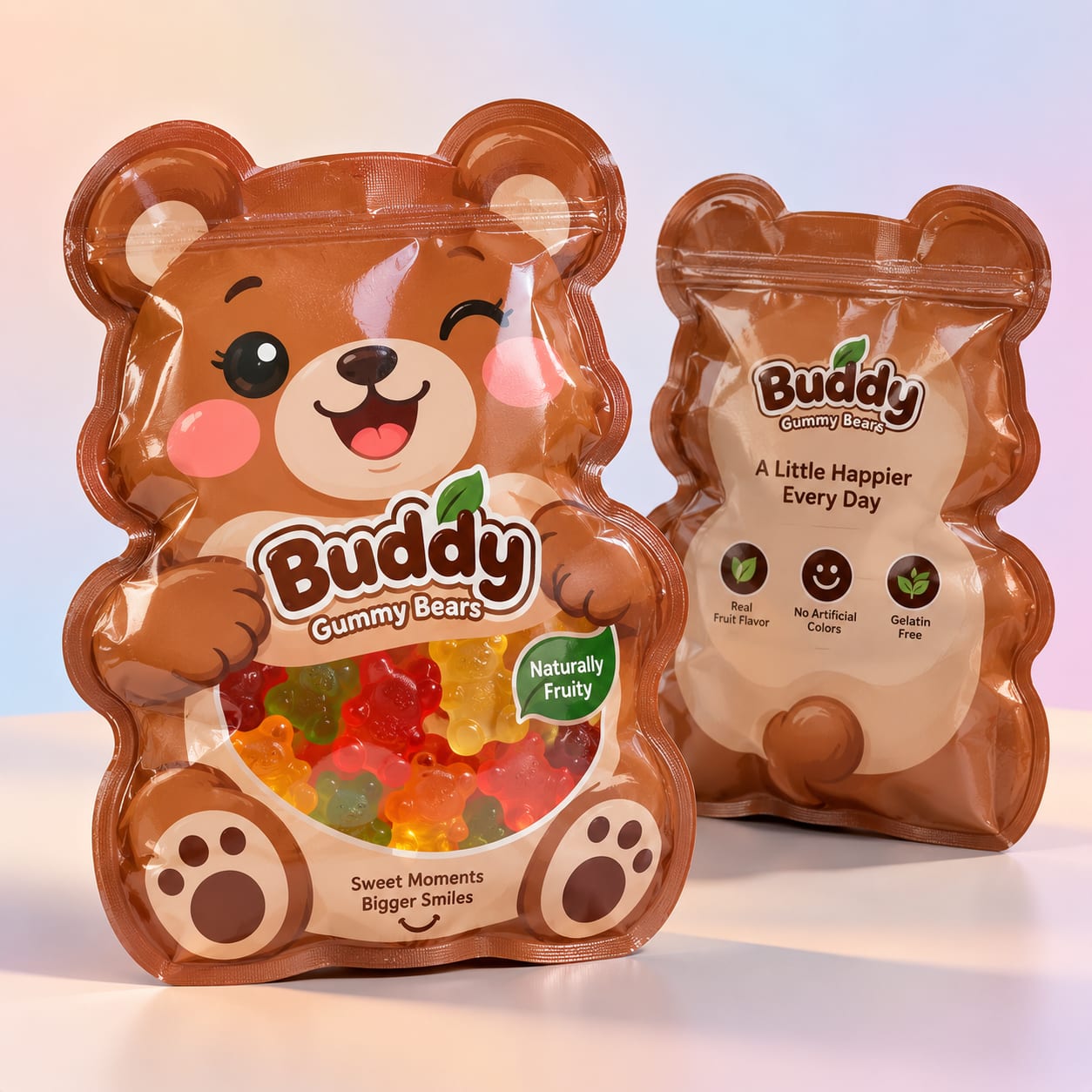
Die-cut Mylar Bags.
Final price depends on size, material, finish and quantity. Your packaging manager confirms it before production.
Your custom box, quoted.
The full specification book.
Six chapters. Six colours. Click a tab to turn the page.
Die-cut Mylar Bags
An outline instead of a rectangle, which is most of what the format is bought for.
A shaped pouch breaks the wall of straight edges on a shelf. The sealed perimeter has to follow that outline cleanly, so curves are drawn with the sealing jaw in mind from the start.

Every detail. Intentional.
Shape is the differentiator
On a shelf of rectangles it stops the eye.
Seals follow the outline
Curves drawn around the sealing jaw.
Tooling once, reorders free
The cutting die runs again at no cost.
Nesting affects the quote
Irregular outlines waste web.
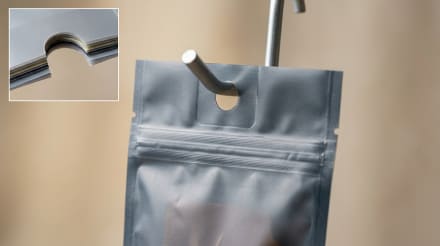
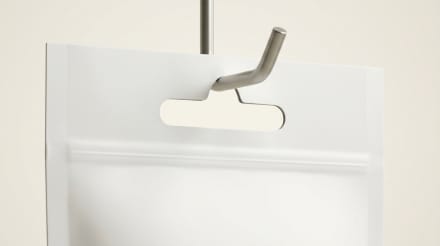
Punched for hook display
Punched into the shape where needed.
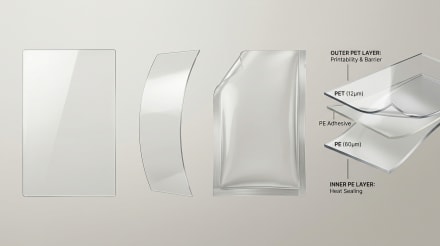
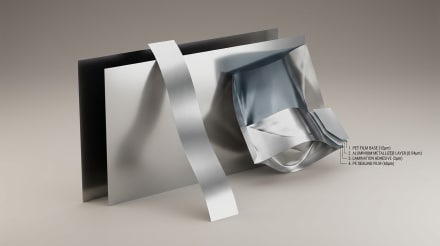
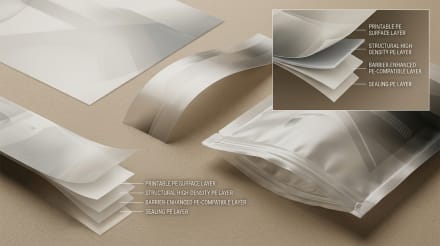
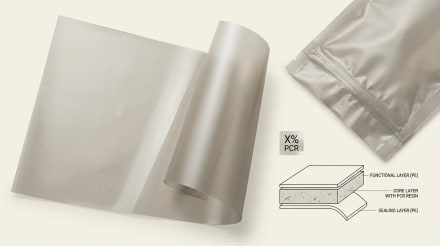
The film structure still holds
The laminate spec does not follow the outline.
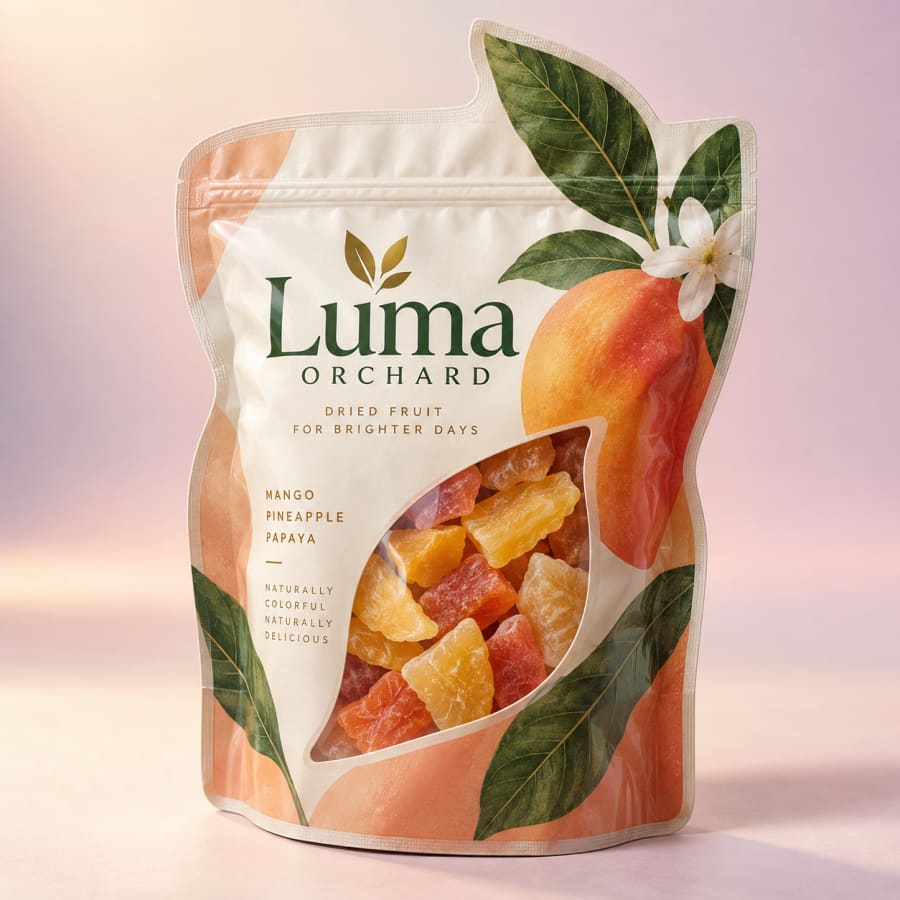
Built like architecture.
Every order of Die-cut Mylar Bags is an engineered build, measured, dieline-cut and hand-wrapped to spec. Below is the standard build sheet.
✦ Need a custom spec? Talk to our atelier. Every detail is negotiable.
Every surface, hand-selected.
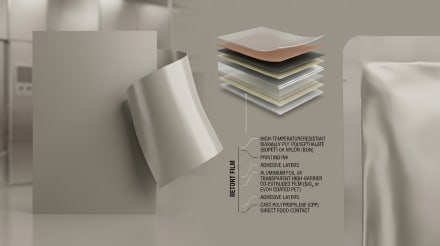
What this product is built from, and the surfaces it takes. Below the build sheet sits the full swatch library. Every option applies across our range, and a physical swatch set is available on request.
Material
The board and paper your box is built from.
 ◷ FINISH
 ◷ FINISH
 ◷ FINISH
 ◷ FINISH
 ◷ FINISH
 ◷ FINISH
 ◷ FINISH
 ◷ FINISH
 ◷ FINISH
 ◷ FINISH
 ◷ FINISH
 ◷ FINISH
Finishes
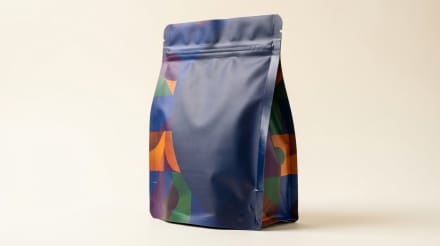
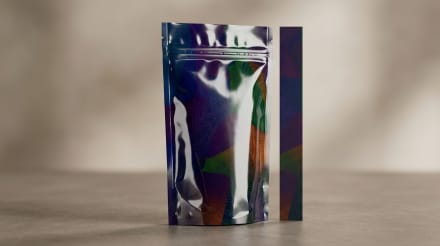
How the outer surface looks, feels, and catches light.
 ◷ FINISH
 ◷ FINISH
 ◷ FINISH
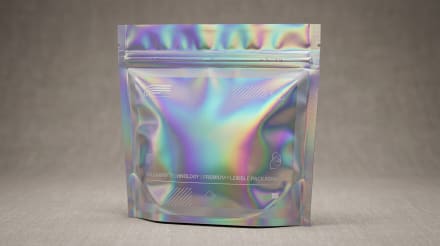 ◷ FINISH
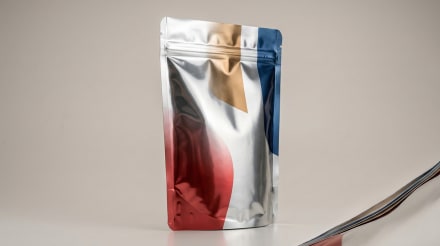 ◷ FINISH
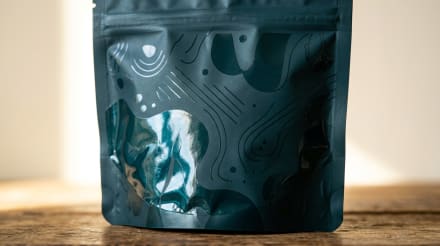 ◷ FINISH
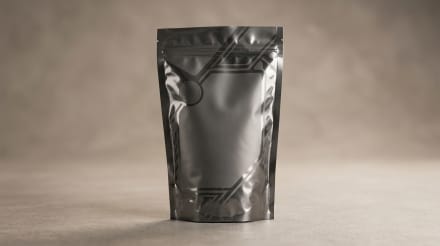 ◷ FINISH
 ◷ FINISH
 ◷ FINISH
 ◷ FINISH
 ◷ FINISH
 ◷ FINISH
Add-ons
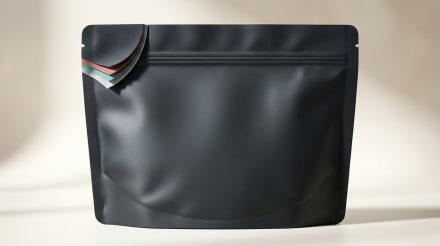
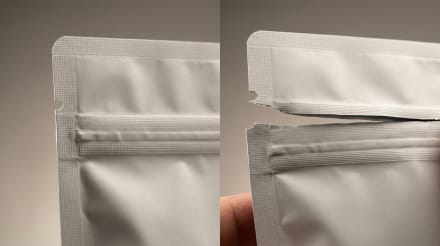
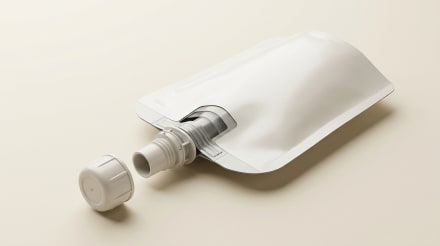
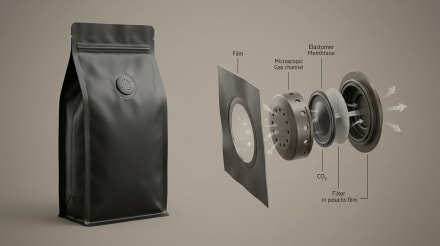
Closures, linings, and hardware that complete the build.
 ◷ FINISH
 ◷ FINISH
 ◷ FINISH
 ◷ FINISH
 ◷ FINISH
 ◷ FINISH
 ◷ FINISH
 ◷ FINISH
 ◷ FINISH
 ◷ FINISH
 ◷ FINISH
 ◷ FINISH
 ◷ FINISH
 ◷ FINISH
 ◷ FINISH
 ◷ FINISH
✦ Mix and match across all three and we'll build your exact combination.
The full kit of capabilities.
Sizing & dieline.
Every Die-cut Mylar Bags is made to your fill, not pulled off a shelf. A pouch is quoted width × length, plus the gusset that lets it stand. Tell us what goes inside and how much of it, and we return a measured spec, free, before you commit to anything.
A pouch is sized by what goes in it, not by outside dimensions. Give us the fill weight and, if you can, the bulk, since 500 g of granola needs far more bag than 500 g of powder.
We quote width × length, then the bottom gusset depth that sets the footprint. Three figures, and the gusset is the one most often left off.
Zipper or heat seal only, valve or no valve, window or full barrier. These change the film and the bag height, so they belong in the spec rather than added afterwards.
✦ Not sure of your size? Send us the product and we measure it and build the dieline.
Pricing & minimums.
We price Die-cut Mylar Bags per specification rather than from a fixed list, because the same build in two different finishes can land at very different numbers. Below is what actually moves the price, so you can shape the spec before you request a quote.
The single biggest lever. Unit cost falls sharply as volume rises, because setup and tooling spread across more pieces.
Board weight and stock choice change both the raw material cost and the shipping weight of the finished run.
Foil, spot UV, embossing and soft-touch each add a pass on press. One or two lift the box; five compound the cost.
Full-bleed print inside and out costs more than a one-sided design on natural stock.
Foam, moulded pulp, velvet pillows, magnets and ribbon are priced per piece on top of the box itself.
Standard production is the base rate. Rush moves you up the production queue and carries a surcharge.
✦ Quotes returned within 24 hours.
Questions, answered.
Everything you need to know about Die-cut Mylar Bags.
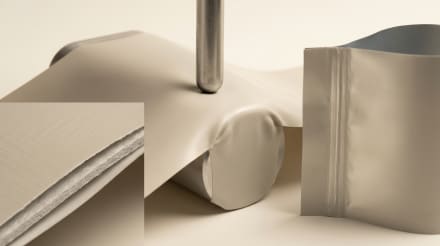
The bag is sealed as a normal pouch first, then a steel cutting die trims the outline through the sealed perimeter. That is why the seal areas have to stay straight and continuous, with the shape drawn outside them. Curves are designed around the sealing jaw from the start rather than added afterwards.
The die is a one-off tooling cost and runs again on reorders at no charge.
Sharp internal corners concentrate stress and start tears in the film. Every inside angle on the outline is radiused so the cut edge holds under handling and does not split when the bag is flexed or dropped. A slightly heavier gauge film also holds a cut edge more cleanly.
We check the outline for this before the die is made and will suggest a radius if the artwork has none.
The main cost driver is nesting, meaning how tightly the outlines fit together across the film web. A shape that nests well wastes little material and the unit cost impact is small at volume. An irregular outline with a lot of unusable film between pieces costs more per bag.
The tooling itself is a single charge, not a per-unit one, so the die is amortised over the run.
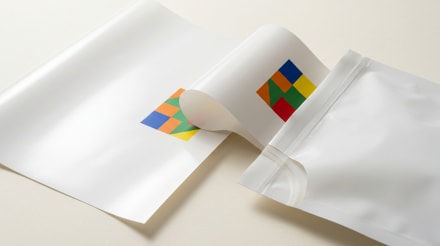
Design the artwork around the shape rather than cropping a rectangle into it. Keep fine detail and text clear of the cut line, because registration shifts slightly between the printed image and the die. Matte lamination shows the outline without glare along the edge, and gloss catches light on it.
Hot foil can follow the die-cut edge as a border, and a shaped window can echo the outline.
Typical faces run from 4 × 6 inches up to 8 × 12 inches, with the outline fully custom. The face is measured across the widest and tallest points of the shape, and the seal margin is added outside that. If the bag will be filled on an automated line, the feed has to be confirmed before we cut tooling.
Yes, hang features are punched into the shape wherever the peg display needs them. A reinforced hang area adds extra material at that point so the hole does not tear out under the weight of a full bag. Shaped headers and rounded corners are cut in the same pass.
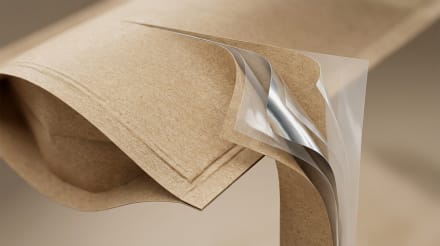
All the standard barrier laminates, from metallised to foil to kraft, cut cleanly, so the outline never limits the structure.
Shaped pouches start at 500 units per design. Because the die is a fixed cost, the per-unit share of tooling falls as the run grows, and pricing tiers again above 1,000. Reorders reuse the same die, and dieline preparation is done free of charge.
Production takes 7 to 10 business days once the die is approved, and a rush option runs 5 to 7 business days. A sample in 5 to 7 business days shows the cut edge, the corner radii and the seal integrity on the real film.
Whatever you pay for the sample is credited to the production order, and shipping is nationwide across the USA.
Other products you might love.

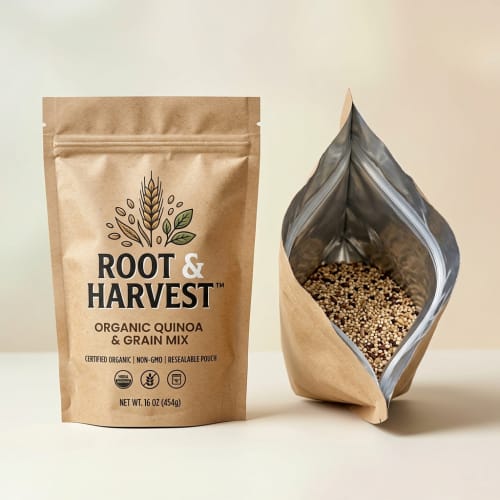
Ready to start your Die-cut Mylar Bags project?
Get a free quote in 24 hours. Our atelier is here to help.