
Retort Pouches.
Final price depends on size, material, finish and quantity. Your packaging manager confirms it before production.
Your custom box, quoted.
The full specification book.
Six chapters. Six colours. Click a tab to turn the page.
Retort Pouches
Built to be cooked in, with laminates that survive a sterilisation cycle a standard film would not.
It gives ambient shelf life without a can, at a fraction of the weight and volume. The seal is the failure point under retort, so integrity is proven at process temperature.

Every detail. Intentional.
Survives the retort cycle
Where a standard food film delaminates.
Shelf-stable without a can
Ambient life at flexible weight.
Seals tested at temperature
Not at room temperature.
Foil for full barrier
The structure most retort products need.
Notch or laser score
Openable after a rigid seal.
Flat or gusseted
By whether it stands on a shelf.
Built like architecture.
Every order of Retort Pouches is an engineered build, measured, dieline-cut and hand-wrapped to spec. Below is the standard build sheet.
✦ Need a custom spec? Talk to our atelier. Every detail is negotiable.
Every surface, hand-selected.
What this product is built from, and the surfaces it takes. Below the build sheet sits the full swatch library. Every option applies across our range, and a physical swatch set is available on request.
Material
The board and paper your box is built from.
 ◷ FINISH
 ◷ FINISH
 ◷ FINISH
 ◷ FINISH
 ◷ FINISH
 ◷ FINISH
 ◷ FINISH
 ◷ FINISH
 ◷ FINISH
 ◷ FINISH
 ◷ FINISH
 ◷ FINISH
Finishes
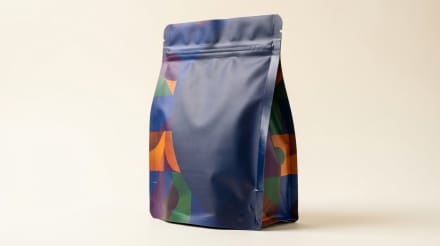
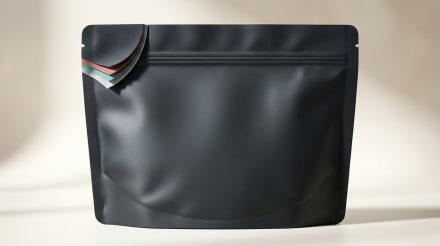
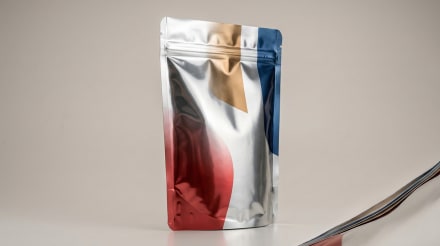
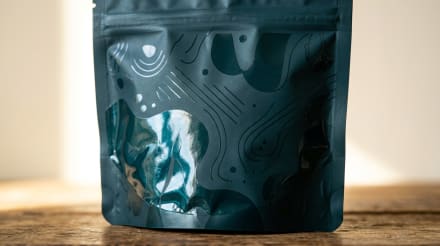
How the outer surface looks, feels, and catches light.
 ◷ FINISH
 ◷ FINISH
 ◷ FINISH
 ◷ FINISH
 ◷ FINISH
 ◷ FINISH
 ◷ FINISH
 ◷ FINISH
 ◷ FINISH
 ◷ FINISH
 ◷ FINISH
 ◷ FINISH
Add-ons
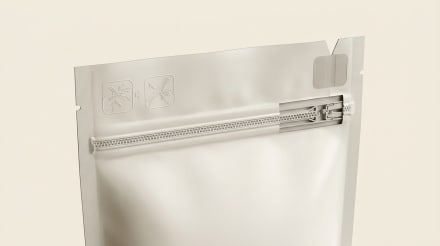
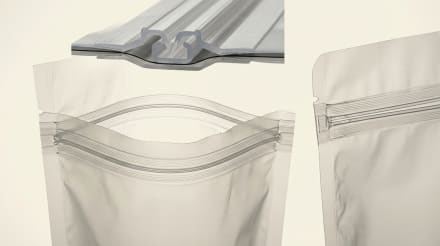
Closures, linings, and hardware that complete the build.
 ◷ FINISH
 ◷ FINISH
 ◷ FINISH
 ◷ FINISH
 ◷ FINISH
 ◷ FINISH
 ◷ FINISH
 ◷ FINISH
 ◷ FINISH
 ◷ FINISH
 ◷ FINISH
 ◷ FINISH
 ◷ FINISH
 ◷ FINISH
 ◷ FINISH
 ◷ FINISH
✦ Mix and match across all three and we'll build your exact combination.
The full kit of capabilities.
Sizing & dieline.
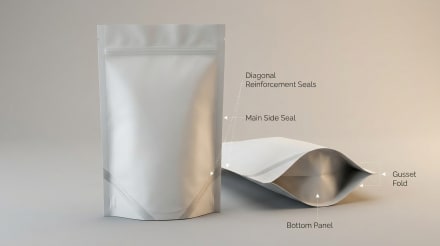
Every Retort Pouches is made to your fill, not pulled off a shelf. A pouch is quoted width × length, plus the gusset that lets it stand. Tell us what goes inside and how much of it, and we return a measured spec, free, before you commit to anything.
A pouch is sized by what goes in it, not by outside dimensions. Give us the fill weight and, if you can, the bulk, since 500 g of granola needs far more bag than 500 g of powder.
We quote width × length, then the bottom gusset depth that sets the footprint. Three figures, and the gusset is the one most often left off.
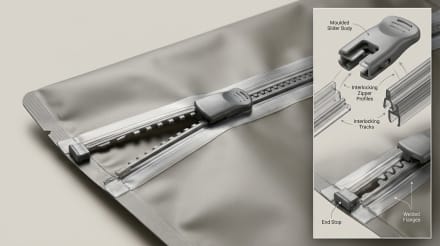
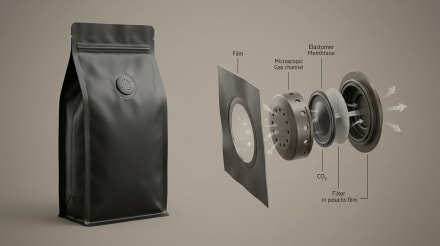
Zipper or heat seal only, valve or no valve, window or full barrier. These change the film and the bag height, so they belong in the spec rather than added afterwards.
✦ Not sure of your size? Send us the product and we measure it and build the dieline.
Pricing & minimums.
We price Retort Pouches per specification rather than from a fixed list, because the same build in two different finishes can land at very different numbers. Below is what actually moves the price, so you can shape the spec before you request a quote.
The single biggest lever. Unit cost falls sharply as volume rises, because setup and tooling spread across more pieces.
Board weight and stock choice change both the raw material cost and the shipping weight of the finished run.
Foil, spot UV, embossing and soft-touch each add a pass on press. One or two lift the box; five compound the cost.
Full-bleed print inside and out costs more than a one-sided design on natural stock.
Foam, moulded pulp, velvet pillows, magnets and ribbon are priced per piece on top of the box itself.
Standard production is the base rate. Rush moves you up the production queue and carries a surcharge.
✦ Quotes returned within 24 hours.
Questions, answered.
Everything you need to know about Retort Pouches.
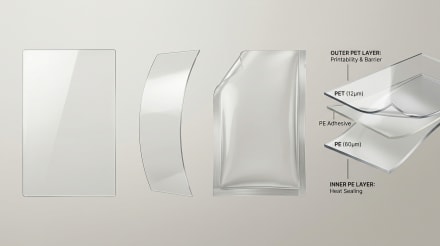
Three things a standard food pouch lacks: a cast polypropylene sealant rated for the vessel, heat-resistant laminating adhesives, and inks that hold colour through steam. An ordinary LLDPE sealant softens and the seal lets go at process temperature. Ordinary adhesives break down and the layers peel apart.
Retort runs at around 121°C for 15 to 60 minutes depending on the product and pack size. Every layer in the structure has to be specified for that cycle, and we prove the seal at temperature rather than in a room-temperature test.
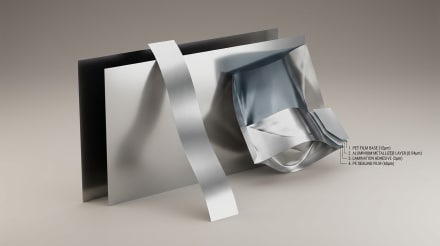
PET, aluminium foil and CPP is the standard retort structure and the one we quote first. It gives full light and oxygen barrier behind a sealant that holds through the cycle, which is what most retort products need for years at ambient. Where the pack holds bone, shell or hard pieces, we add a nylon layer for puncture and flex resistance.
A transparent retort film exists for products that need to be seen. It is foil-free, so barrier is lower and shelf life is shorter, and we would only steer you there when visibility is a real selling point.
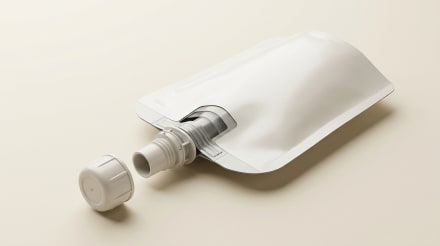
Yes, but only with a retort-rated spout and cap, because a standard fitment distorts in the vessel. The spout is welded into the top seal before filling and has to hold its shape and thread through the same cycle the film does.
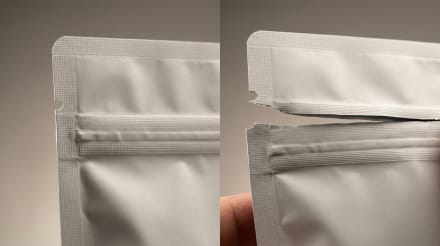
For liquid and semi-liquid products it is the difference between a pack that pours and one that has to be cut open. A tear notch or laser score is the alternative on solid products, and we recommend one either way, since a pouch is often opened hot.
Retort-grade inks are required, not optional, because standard inks shift and fade under steam. Gloss lamination is the most common finish and it comes through the vessel well with high colour saturation for grocery shelves. A retort-grade matte is available for premium ready meals and pet food.
A metallic reveal leaves areas unprinted so the foil shows through. On foil-free structures a transparent panel is possible where the barrier allows it. Whatever the finish, we run the print through a test cycle before the job goes to press.
Flat width by length, with gusset depth added on stand-up versions, and 5 x 7, 6 x 9 and 7 x 10 inches cover most single-serve and family formats. The seal margins on a retort pouch are wider than on a standard bag, so usable fill area is a little smaller than the outside dimension suggests.
Hold time in the vessel depends partly on pack size, since heat has further to travel in a thicker pack. Your co-packer will have a view on that, and we size to suit their process.
Retort pouches run from 500 pieces. The specialised laminate and sealant make them the most expensive flexible structure we offer, and the price tiers down once the order passes 1,000. A spout fitment or nylon layer is priced per unit and does not change the floor.
Orders scale to 100,000 pieces. Most customers qualify the pouch on their co-packer's line at the minimum, then reorder in volume once the process is proven.
Lead time is 7 to 10 business days for standard production and 5 to 7 business days on a rush. Samples take 5 to 7 business days to arrive and the charge is deducted from the production order.
We would not skip the sample here. Fill it, seal it and run it through the real retort cycle at the real hold time, then check the seal and look for any delamination at the corners. A pouch that passes that test will pass on the line.
It reaches the same commercially sterile result as canning and gives years at ambient, at a fraction of a can's weight and volume. That saves on freight and on shelf space, and it opens by hand without a tool.
The trade-off is puncture. A foil laminate is tougher than it looks but it is not steel, so cartons and shipper design matter more than they would for cans. Nylon in the structure and a sensible case count are the usual answers.
Other products you might love.


Ready to start your Retort Pouches project?
Get a free quote in 24 hours. Our atelier is here to help.