Luxury Apparel Boxes.
Final price depends on size, material, finish and quantity. Your packaging manager confirms it before production.
Your custom box, quoted.
The full specification book.
Six chapters. Six colours. Click a tab to turn the page.
Luxury Apparel Boxes
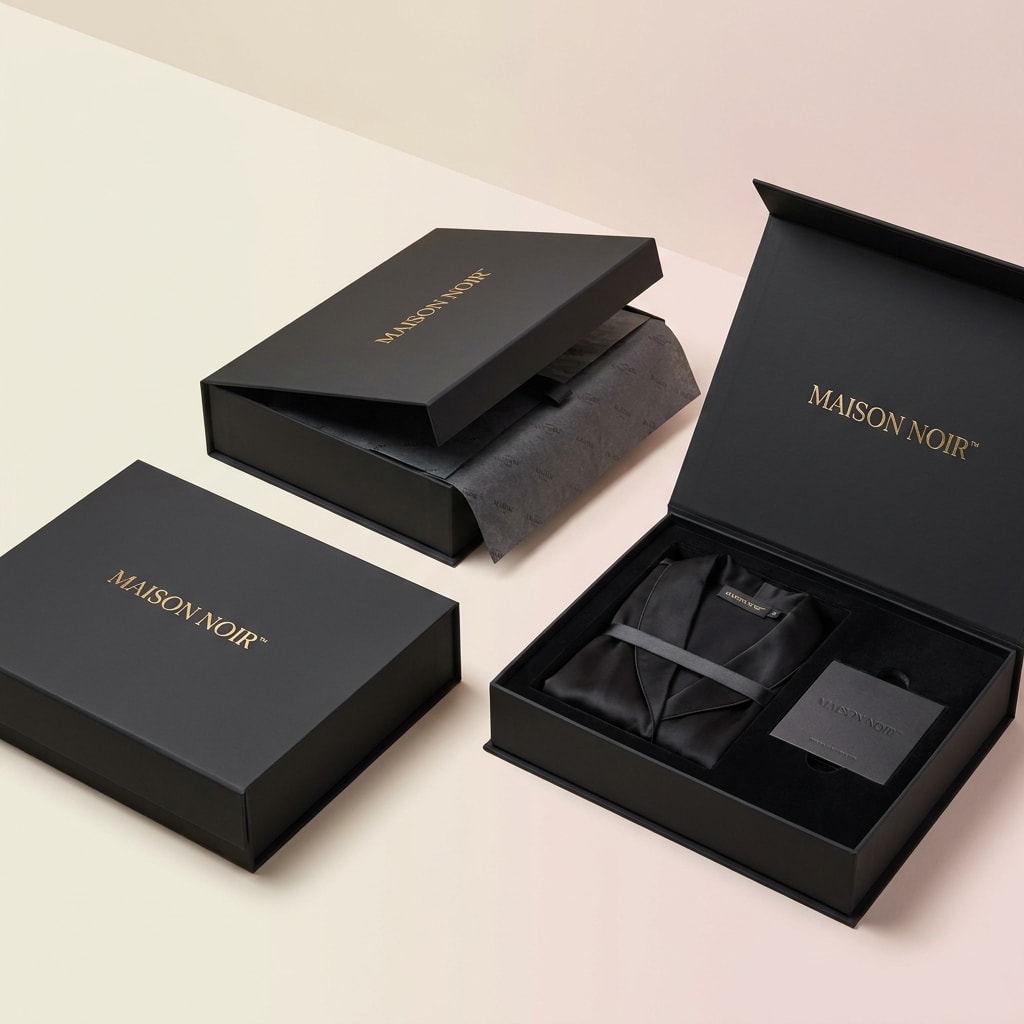
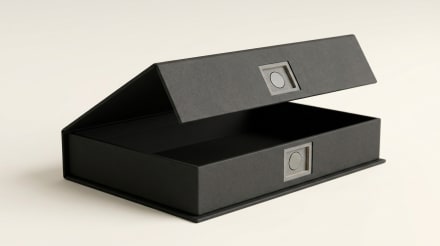
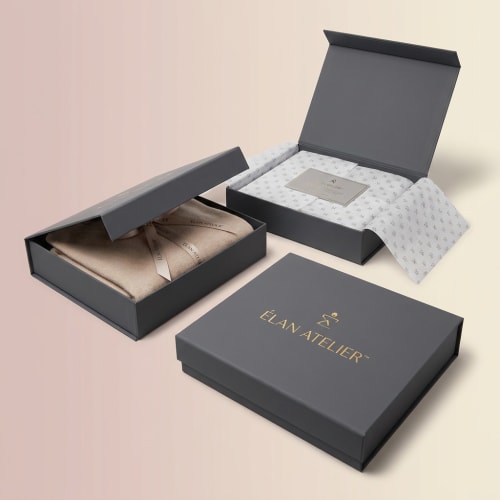
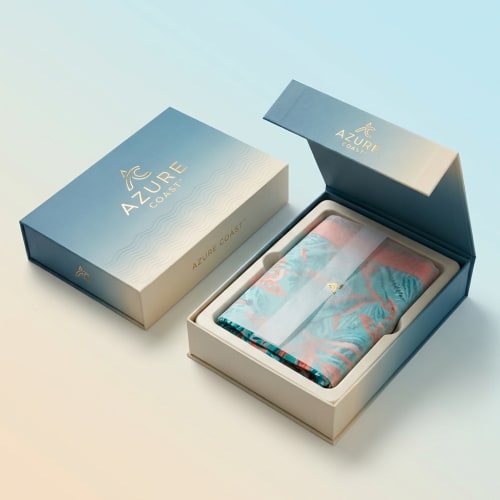
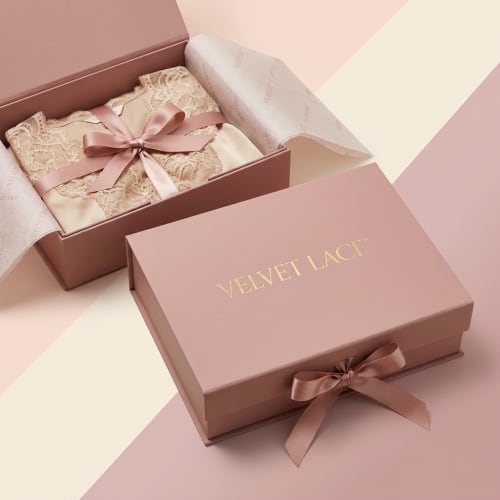
Wrapped rigid board with a magnetic closure, the construction that signals price before the lid opens.
Rigid chipboard wrapped in printed paper gives a weight and a sound that folding carton cannot. At this tier the box is part of what was bought.
Every detail. Intentional.
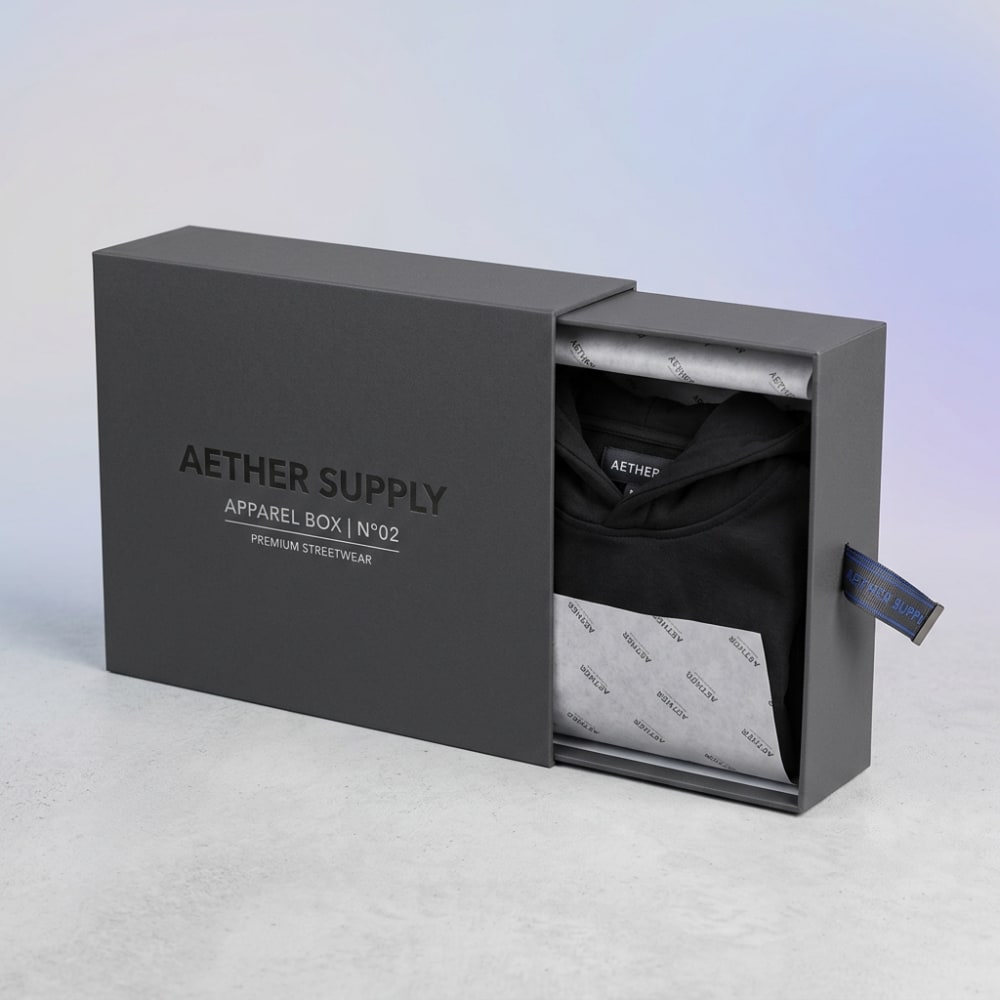
Weight is the signal
Rigid board reads as expensive.
Magnets close with a sound
Deliberately engineered.
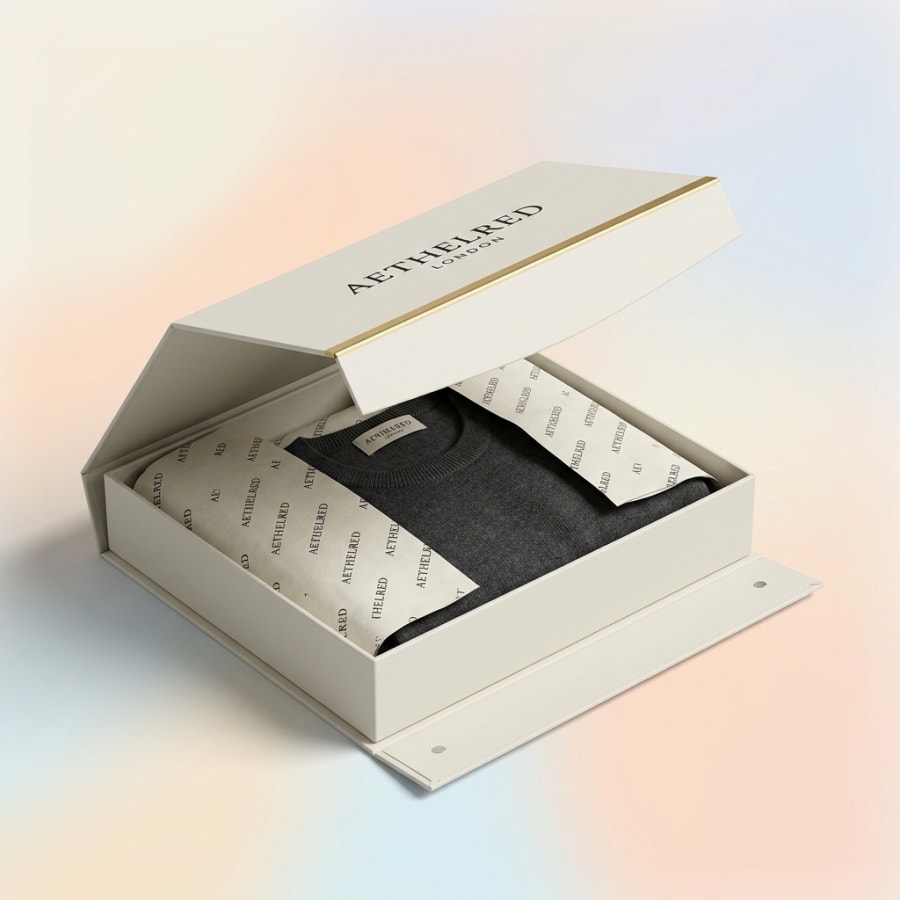
Wrapped, not printed
The wrap carries the print.
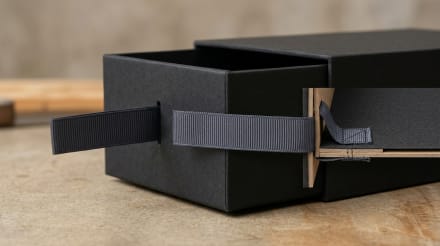
Ribbon pulls, not tears
Extraction as choreography.
Kept after the garment
Which justifies the cost.
Thirty-unit minimum
Rigid tooling changes the maths.
Built like architecture.
Every order of Luxury Apparel Boxes is an engineered build, measured, dieline-cut and hand-wrapped to spec. Below is the standard build sheet.
✦ Need a custom spec? Talk to our atelier. Every detail is negotiable.
Every surface, hand-selected.
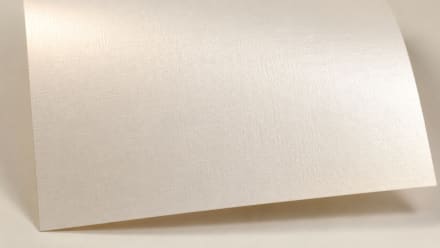
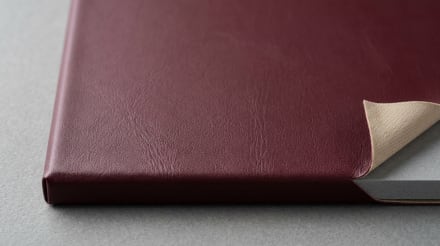
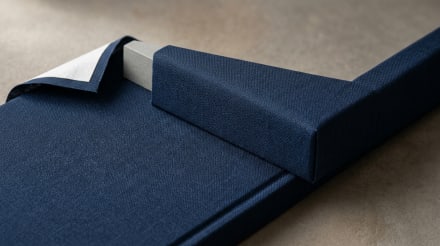
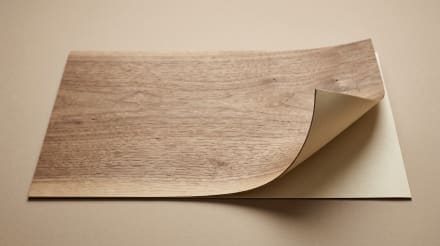
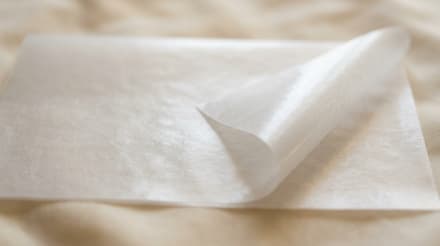
What this product is built from, and the surfaces it takes. Below the build sheet sits the full swatch library. Every option applies across our range, and a physical swatch set is available on request.
Material
The board and paper your box is built from.
 ◷ FINISH
 ◷ FINISH
 ◷ FINISH
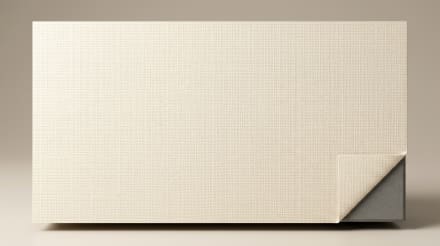 ◷ FINISH
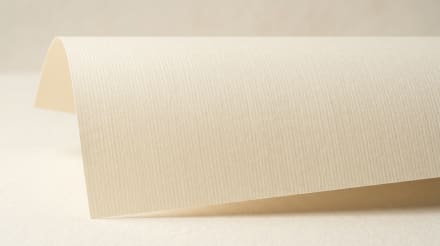 ◷ FINISH
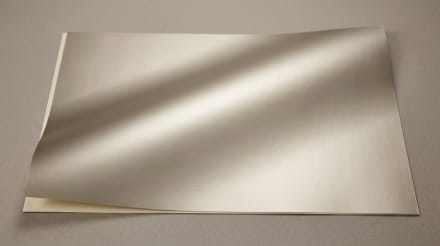 ◷ FINISH
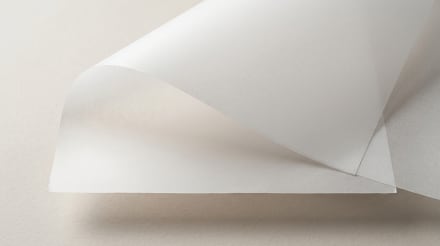 ◷ FINISH
 ◷ FINISH
 ◷ FINISH
 ◷ FINISH
 ◷ FINISH
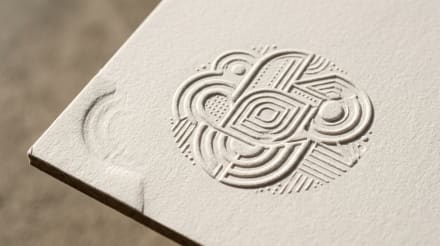
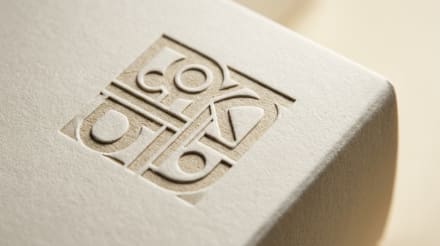
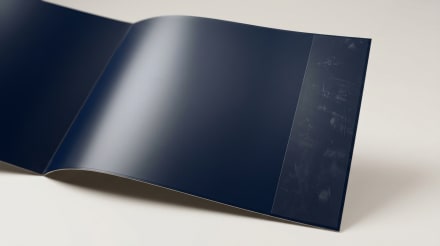
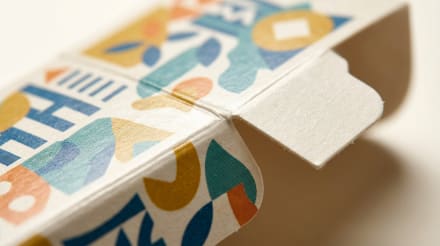
Finishes
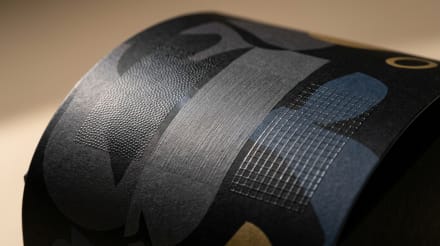
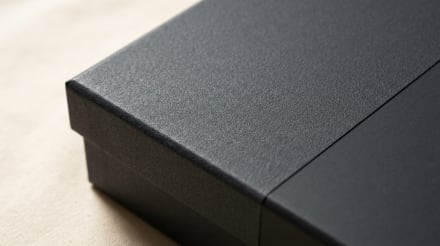
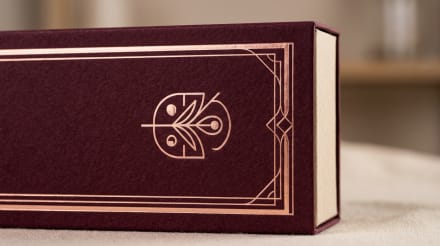
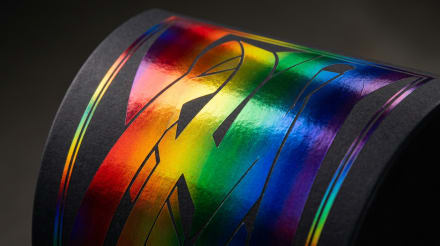
How the outer surface looks, feels, and catches light.
 ◷ FINISH
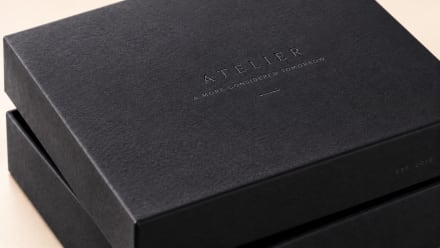 ◷ FINISH
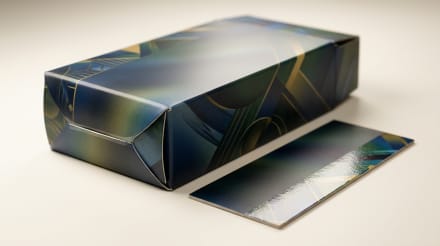 ◷ FINISH
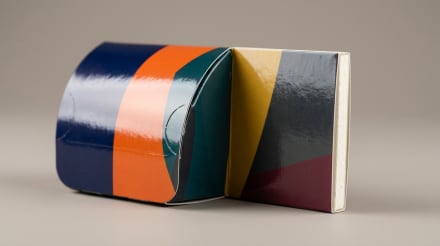 ◷ FINISH
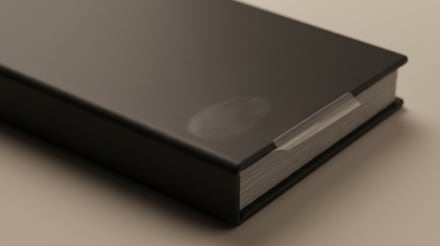 ◷ FINISH
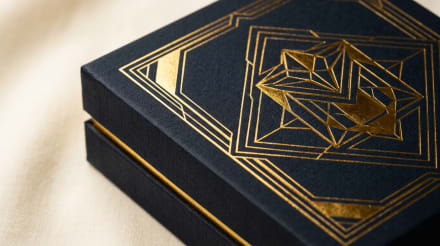 ◷ FINISH
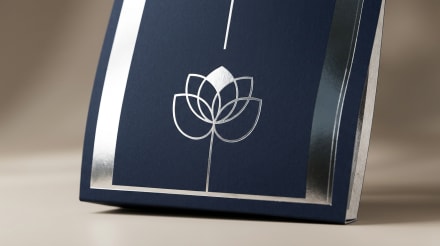 ◷ FINISH
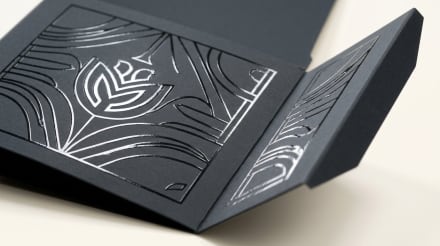 ◷ FINISH
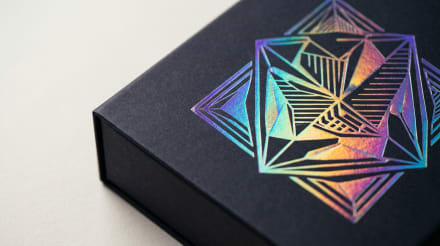 ◷ FINISH
 ◷ FINISH
 ◷ FINISH
 ◷ FINISH
 ◷ FINISH
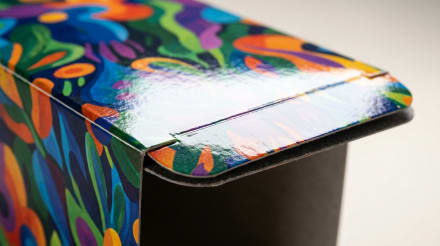 ◷ FINISH
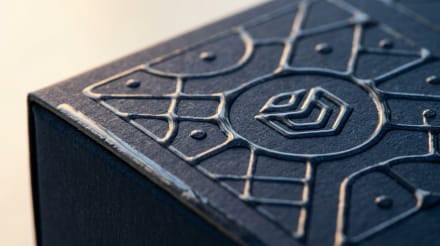 ◷ FINISH
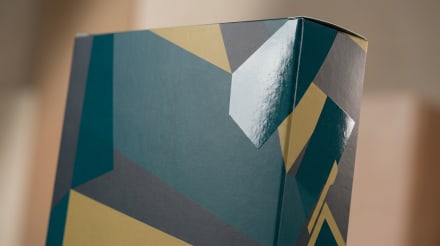 ◷ FINISH
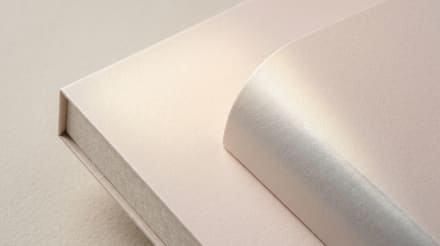 ◷ FINISH
 ◷ FINISH
 ◷ FINISH
 ◷ FINISH
 ◷ FINISH
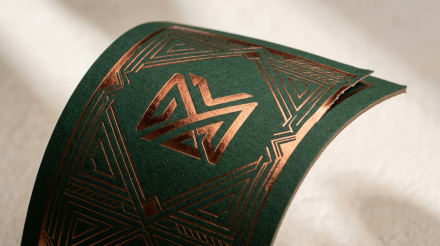 ◷ FINISH
 ◷ FINISH
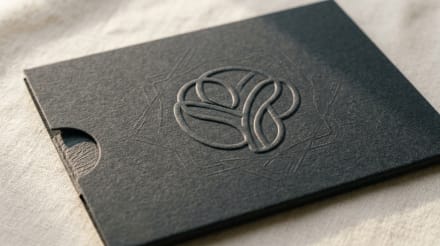 ◷ FINISH
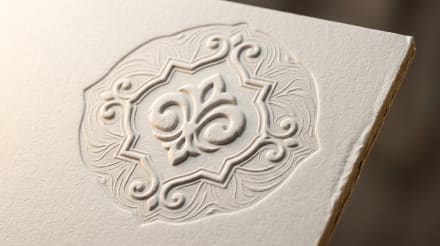 ◷ FINISH
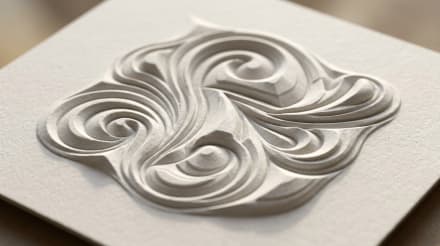 ◷ FINISH
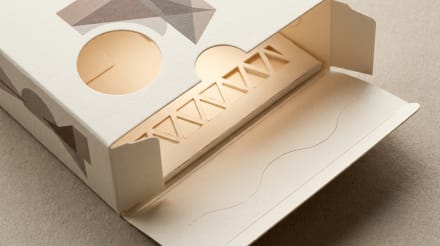 ◷ FINISH
Add-ons
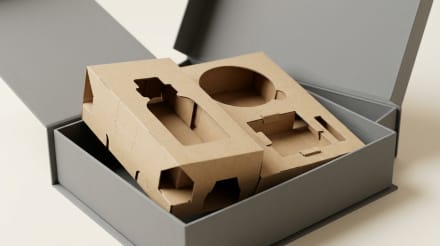
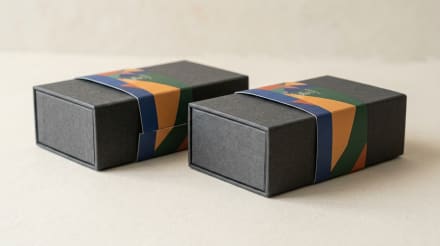
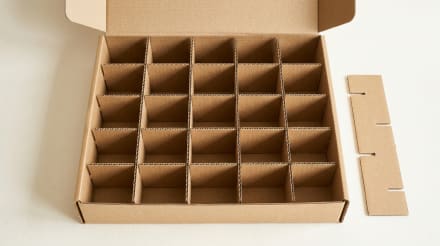
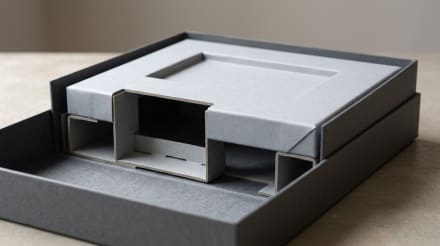
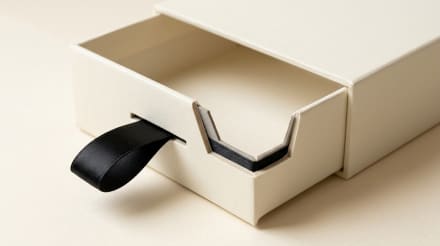
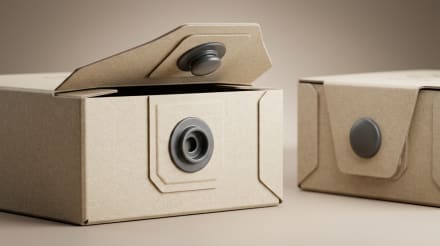
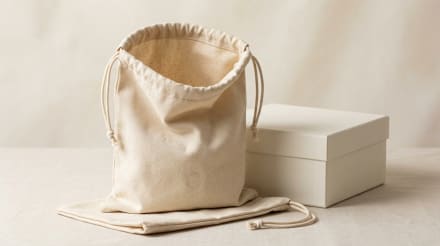
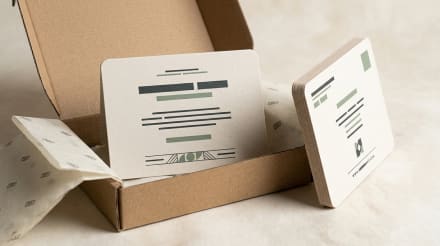
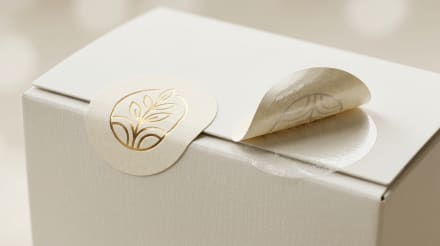
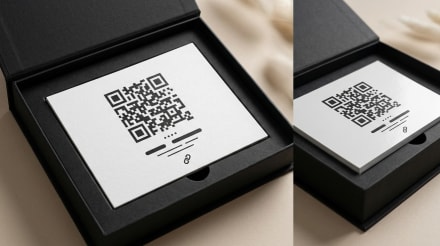
Closures, linings, and hardware that complete the build.
 ◷ FINISH
 ◷ FINISH
 ◷ FINISH
 ◷ FINISH
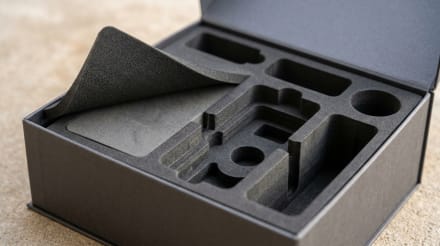 ◷ FINISH
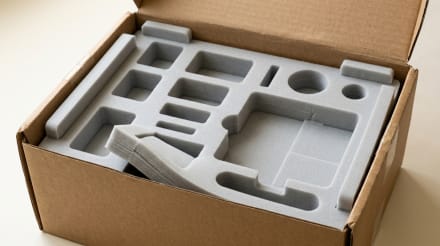 ◷ FINISH
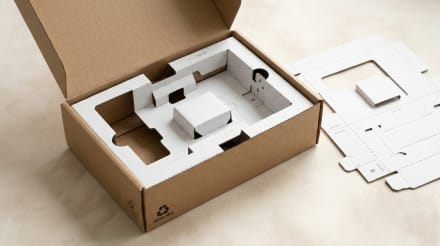 ◷ FINISH
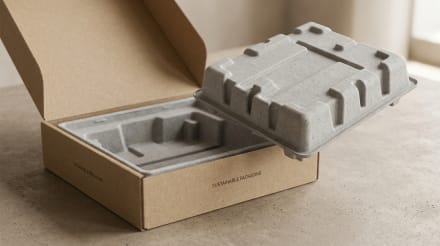 ◷ FINISH
 ◷ FINISH
 ◷ FINISH
 ◷ FINISH
 ◷ FINISH
 ◷ FINISH
 ◷ FINISH
 ◷ FINISH
 ◷ FINISH
 ◷ FINISH
 ◷ FINISH
 ◷ FINISH
 ◷ FINISH
 ◷ FINISH
✦ Mix and match across all three and we'll build your exact combination.
The full kit of capabilities.
Sizing & dieline.
We cut Luxury Apparel Boxes to a dieline built around your product instead of pulling a stock size off the shelf. Send us the length, width and height of the item (or the item itself) and we return a measured dieline, free, before you commit to anything.
Length, width and height of the item itself, at its widest points. Measure the product, not the box you happen to use today.
Allow 2–4 mm on each axis for a snug fit, and more if you are adding foam, a pillow insert or tissue.
We quote as Length × Width × Height. Tell us whether you are working in millimetres or inches and we match it.
✦ Not sure of your size? Send us the product and we measure it and build the dieline.
Pricing & minimums.
We price Luxury Apparel Boxes per specification rather than from a fixed list, because the same build in two different finishes can land at very different numbers. Below is what actually moves the price, so you can shape the spec before you request a quote.
The single biggest lever. Unit cost falls sharply as volume rises, because setup and tooling spread across more pieces.
Board weight and stock choice change both the raw material cost and the shipping weight of the finished run.
Foil, spot UV, embossing and soft-touch each add a pass on press. One or two lift the box; five compound the cost.
Full-bleed print inside and out costs more than a one-sided design on natural stock.
Foam, moulded pulp, velvet pillows, magnets and ribbon are priced per piece on top of the box itself.
Standard production is the base rate. Rush moves you up the production queue and carries a surcharge.
✦ Quotes returned within 24 hours.
Questions, answered.
Everything you need to know about Luxury Apparel Boxes.
The core is rigid greyboard in the 2 to 3mm range, wrapped in printed or dyed paper and glued up so it never folds flat. That thickness gives the box its weight in the hand and the dull knock when the lid lands. A folding carton in SBS or E-flute prints just as well, but it flexes when you pick it up, and a buyer at this price notices.
For a heavy knit or a coat we would go to the thicker end of that range so the long sides don't bow.
A dyed-through paper is coloured all the way through the sheet, so a scuff or a knocked corner shows the same colour underneath. A printed wrap on a white base shows a pale fleck the first time it rubs against another box in the stockroom. On a navy or black house colour that fleck is the first thing a customer sees.
Dyed stocks still take foil, blind deboss and a spot of print, so the brand mark goes on top as usual.
Thin magnets are set into the board under the wrap, one in the front flap and a matching plate in the base wall, so the lid pulls shut by itself. Nothing shows on the outside. We set the pull so the lid stays closed when the box is carried by its sides but still lifts with one finger.
A ribbon pull on the front edge gives the customer something to lift by and keeps fingernails off a soft-touch wrap.
Blind deboss, hot foil, spot UV and soft-touch lamination are the usual choices, and most houses pick one or two. A blind deboss on a dyed wrap is the quietest option and survives handling better than ink. Foil reads best on dark papers. Soft-touch gives the wrap a velvety hand but shows fingerprints on deep colours.
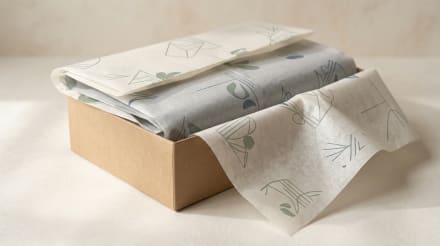
If the box travels with printed tissue, a seal and a carrier bag, we colour-match all of them to one house standard so the navy doesn't drift from piece to piece.
Yes, at this tier the box is usually sized up so a jacket or dress takes one or two folds instead of three or four. Every fold is a crease the customer has to steam out, and a hard fold across a structured shoulder can stay visible. The trade-off is a larger footprint and more board per unit.
Our common sizes of 13 × 10 × 4 in and 16 × 12 × 5 in cover most folded tops and knits. Coats and gowns usually need a custom size, which we quote from your folded dimensions.
The minimum run is 500 boxes per size and design. Setting up a rigid job means cutting board, printing the wrap, placing magnets and making a foil die, and 500 units is where that set-up spreads sensibly across the order. Runs can go as high as 100,000.
If you carry two sizes, each one counts as its own run of 500. Keeping the same wrap paper across both at least holds the colour steady.
Production takes 7 to 10 business days once the artwork and a sample are signed off, or 5 to 7 business days on rush. The physical sample comes first and takes 5 to 7 business days. We'd push for it here, because the magnet pull, the wrap colour and the lid fit are things you have to hold to judge.
The sample fee comes off the production invoice when you place the order, and delivery is anywhere in the USA.
Yes, the collapsible edition folds flat and squares up at the packing bench, which is what makes rigid workable for e-commerce. A fixed rigid box takes its full volume on the pallet from the day it is made, so warehouse space fills quickly. The collapsible build keeps the wrap and the weight.
For carrier shipping, pack the box inside a plain corrugated shipper. A rigid wrap scuffs on conveyor belts and parcel sorters, and the outer box takes that wear instead.
Other products you might love.
Ready to start your Luxury Apparel Boxes project?
Get a free quote in 24 hours. Our atelier is here to help.