
Mylar Food Storage Bags.
Final price depends on size, material, finish and quantity. Your packaging manager confirms it before production.
Your custom box, quoted.
The full specification book.
Six chapters. Six colours. Click a tab to turn the page.
Mylar Food Storage Bags
Sized in gallons and specified in years, for long-term storage rather than shelf life.
One and five gallon formats are the storage trade's units, paired with oxygen absorbers. Thickness carries the years, because a bag in a bucket takes abrasion a shelf pack never sees.

Every detail. Intentional.
Gallons, not inches
The units this trade actually orders in.
Absorbers specified alongside
Oxygen removed after sealing, not before.
Heavier gauge for years
Puncture resistance inside a storage bucket.
Light blocked entirely
Full metallisation, which clear film cannot do.
Seals rated for the term
Long storage tests the seam, not the film.
Labelled for the shelf life
Contents and date, because it is opened years later.
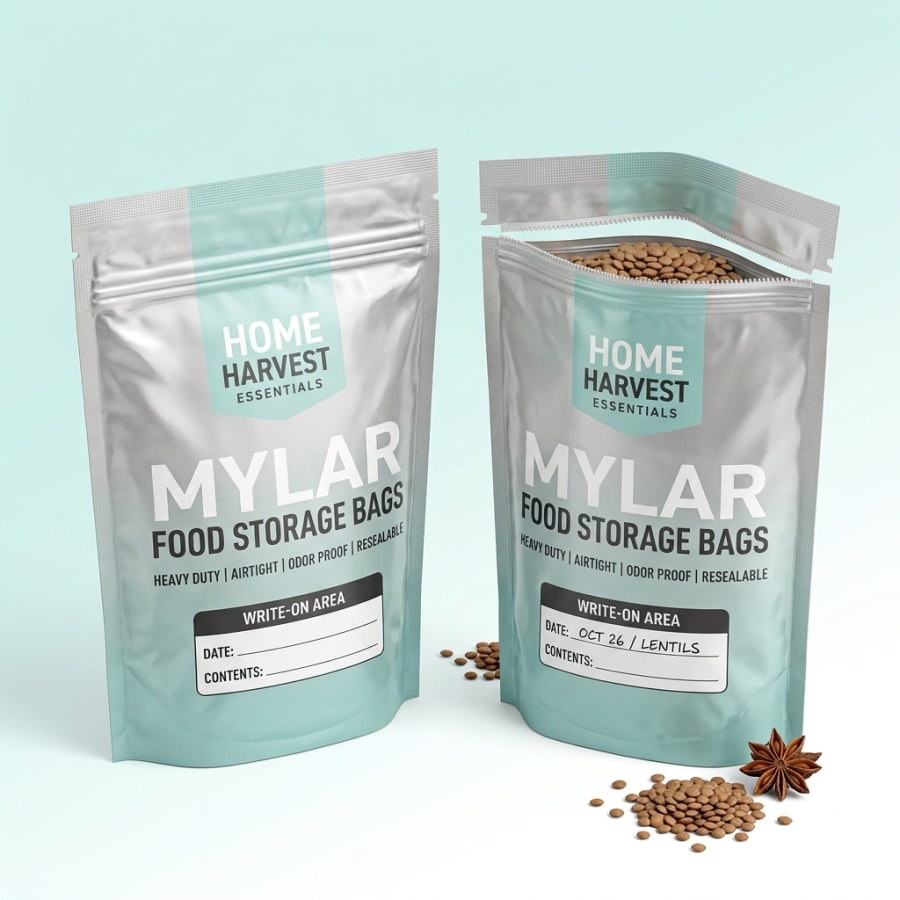
Built like architecture.
Every order of Mylar Food Storage Bags is an engineered build, measured, dieline-cut and hand-wrapped to spec. Below is the standard build sheet.
✦ Need a custom spec? Talk to our atelier. Every detail is negotiable.
Every surface, hand-selected.
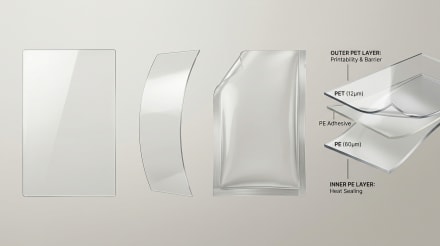
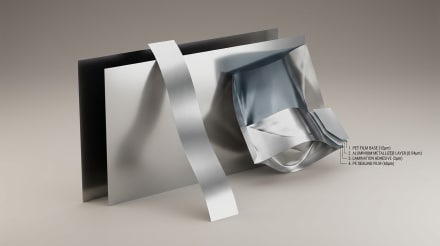
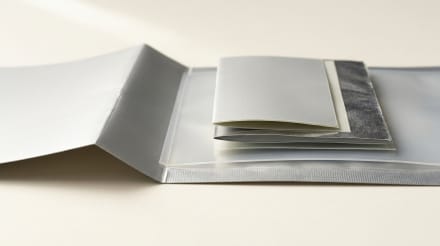
What this product is built from, and the surfaces it takes. Below the build sheet sits the full swatch library. Every option applies across our range, and a physical swatch set is available on request.
Material
The board and paper your box is built from.
 ◷ FINISH
 ◷ FINISH
 ◷ FINISH
 ◷ FINISH
 ◷ FINISH
 ◷ FINISH
 ◷ FINISH
 ◷ FINISH
 ◷ FINISH
 ◷ FINISH
 ◷ FINISH
 ◷ FINISH
Finishes
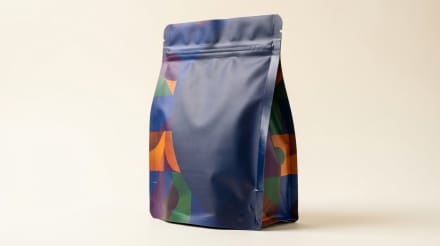
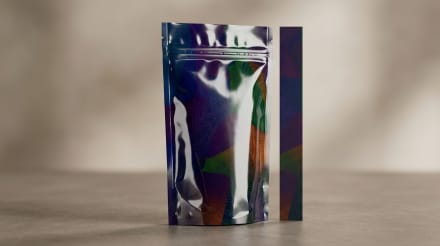
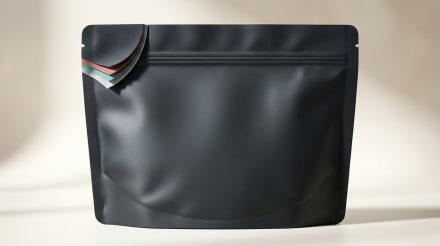
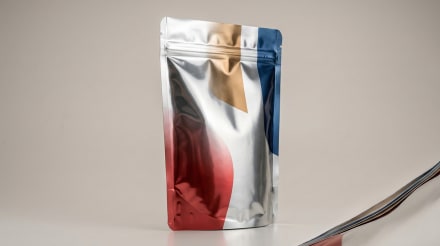
How the outer surface looks, feels, and catches light.
 ◷ FINISH
 ◷ FINISH
 ◷ FINISH
 ◷ FINISH
 ◷ FINISH
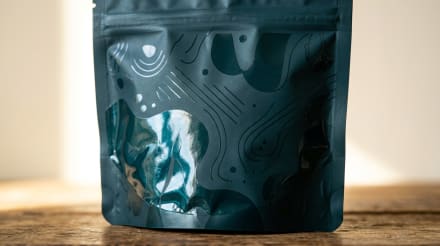 ◷ FINISH
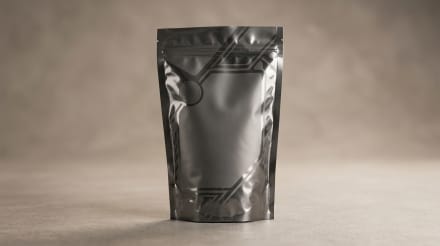 ◷ FINISH
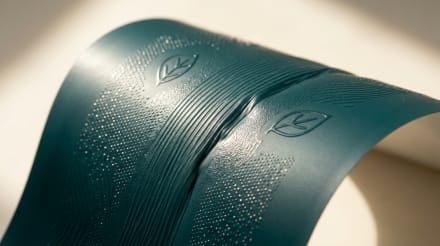 ◷ FINISH
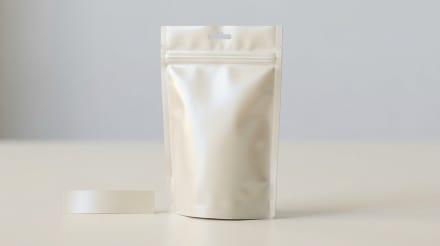 ◷ FINISH
 ◷ FINISH
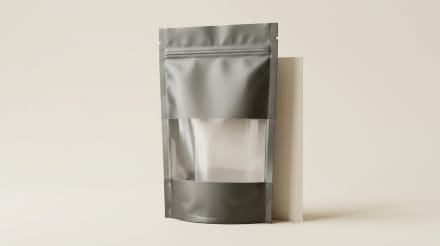 ◷ FINISH
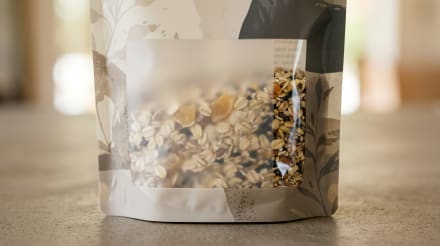 ◷ FINISH
Add-ons
Closures, linings, and hardware that complete the build.
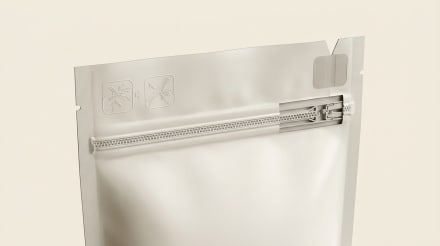 ◷ FINISH
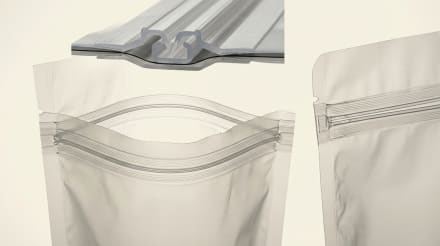 ◷ FINISH
 ◷ FINISH
 ◷ FINISH
 ◷ FINISH
 ◷ FINISH
 ◷ FINISH
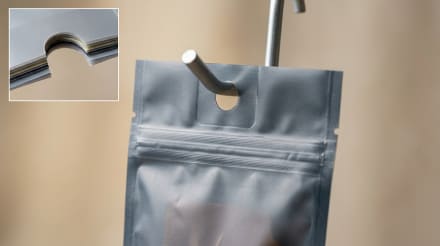 ◷ FINISH
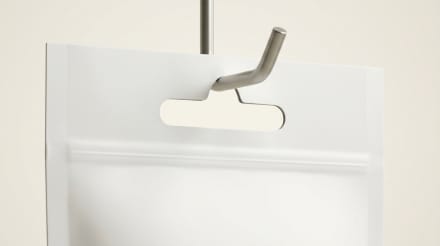 ◷ FINISH
 ◷ FINISH
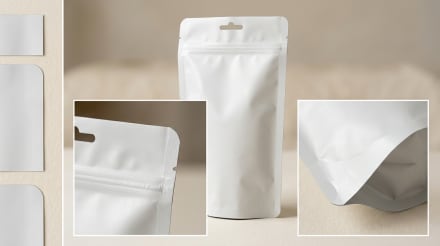 ◷ FINISH
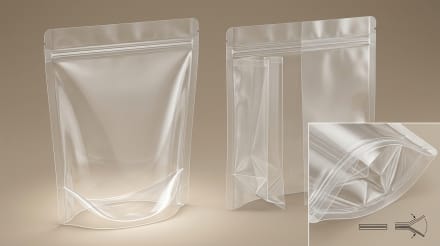 ◷ FINISH
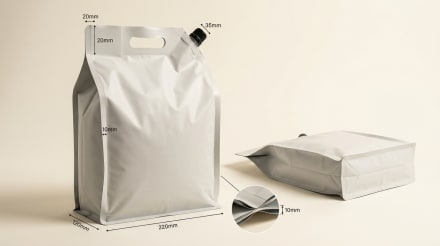 ◷ FINISH
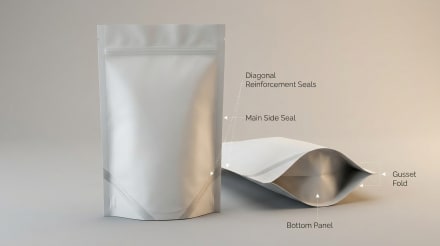 ◷ FINISH
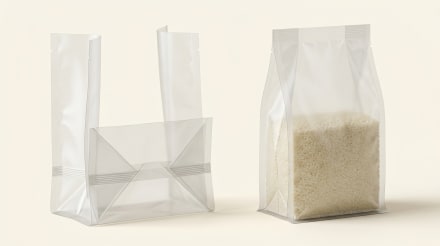 ◷ FINISH
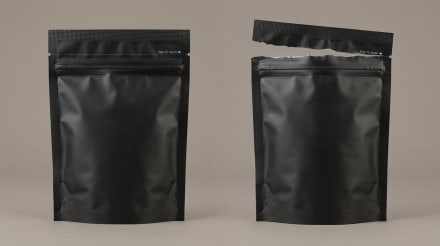 ◷ FINISH
✦ Mix and match across all three and we'll build your exact combination.
The full kit of capabilities.
Sizing & dieline.
Every Mylar Food Storage Bags is made to your fill, not pulled off a shelf. A pouch is quoted width × length, plus the gusset that lets it stand. Tell us what goes inside and how much of it, and we return a measured spec, free, before you commit to anything.
A pouch is sized by what goes in it, not by outside dimensions. Give us the fill weight and, if you can, the bulk, since 500 g of granola needs far more bag than 500 g of powder.
We quote width × length, then the bottom gusset depth that sets the footprint. Three figures, and the gusset is the one most often left off.
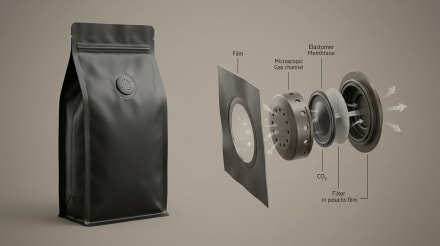
Zipper or heat seal only, valve or no valve, window or full barrier. These change the film and the bag height, so they belong in the spec rather than added afterwards.
✦ Not sure of your size? Send us the product and we measure it and build the dieline.
Pricing & minimums.
We price Mylar Food Storage Bags per specification rather than from a fixed list, because the same build in two different finishes can land at very different numbers. Below is what actually moves the price, so you can shape the spec before you request a quote.
The single biggest lever. Unit cost falls sharply as volume rises, because setup and tooling spread across more pieces.
Board weight and stock choice change both the raw material cost and the shipping weight of the finished run.
Foil, spot UV, embossing and soft-touch each add a pass on press. One or two lift the box; five compound the cost.
Full-bleed print inside and out costs more than a one-sided design on natural stock.
Foam, moulded pulp, velvet pillows, magnets and ribbon are priced per piece on top of the box itself.
Standard production is the base rate. Rush moves you up the production queue and carries a surcharge.
✦ Quotes returned within 24 hours.
Questions, answered.
Everything you need to know about Mylar Food Storage Bags.
Storage bags run 4 to 7 mil because they live inside a bucket for years rather than on a shelf for months. A retail pouch is handled a few times and thrown away. A bag in a pail rubs against the lid, the walls and the other bags every time the bucket is moved, and thin film eventually wears through at the corners.
We put one-gallon bags at 4 to 5.5 mil and five-gallon bags at 5 to 7 mil. The bigger bag carries more weight and sees more handling, so the gauge goes up with it.
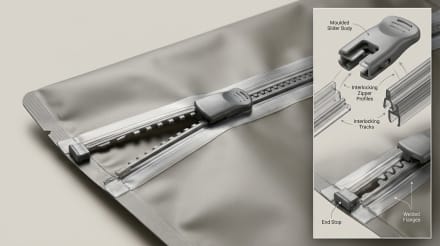
A heat seal fuses the two films into one, and that is the only closure we trust over a decade. A zipper track is a mechanical fit between two plastic profiles. It reseals well for daily use, but it lets a slow trickle of air through, and over years that trickle undoes the absorber.
You close these with a household iron, a hair straightener or an impulse sealer. The seam should be a clean band about half an inch wide with no wrinkles across it.
Absorbers are sized to the volume of the bag, not to the weight of what goes in it. A one-gallon bag takes a 300cc to 500cc sachet and a five-gallon bag needs 2000cc or more. Undersizing is the mistake we see most often, because the air trapped between the pieces is what the absorber has to deal with.
We supply absorbers alongside the bags so the two are matched from the start. A properly sized absorber pulls the bag tight against the contents within about a day of sealing.
Most storage bags ship as plain silver foil, and we would keep it that way unless you are reselling them. The one finish we do push is a matte write-on panel, because a bag opened ten years later needs its contents and packing date on the outside in pen.
Suppliers packing for retail usually go with single-colour print for the brand and contents. Full gravure print is there if the bag is a retail product in its own right. A clear window is available, but it breaks the light barrier, so we generally talk people out of it.
The trade orders in gallons, and a one-gallon bag works out at roughly 8 x 12 inches while a five-gallon bag is about 20 x 30 inches. A 10 x 14 inch bag sits in between for anyone wanting a two-gallon step. The measurement is flat width by flat length, taken across the sealed edges.
Bucket liners are cut to fit standard pails, so tell us which pail you use and we'll size the bag to drop in with enough film left over at the top for a clean seal.
The floor on a custom run is 500 bags. Plain foil bags and write-on panel versions run at the same minimum, and pricing steps down once you pass the 1,000 mark. We can supply the matching absorbers in the same order so you are not sourcing them separately.
Runs go up to 100,000 pieces if you are packing for resale, and mixed sizes can share an order as long as each size meets its own minimum.
Production takes 7 to 10 business days from approved artwork, or plain foil from confirmed spec. If you need them sooner, a rush slot brings that down to 5 to 7 business days. Samples take 5 to 7 business days to reach you, and the sample charge comes off the bulk invoice when you go ahead.
We recommend sealing a sample with a real absorber and leaving it a day before ordering. If the bag draws in tight, the film and seal are doing their job.
The pail takes the crush and the knocks, and the bag inside only has to hold its barrier. A foil laminate on its own is easy to puncture when a bucket is dropped or stacked five high. Inside a rigid liner it is protected from every point load.
We cut liners to the pail's inside dimensions so the bag sits flat against the wall instead of folding over on itself, since a sharp crease in foil is where pinholes start.
Other products you might love.

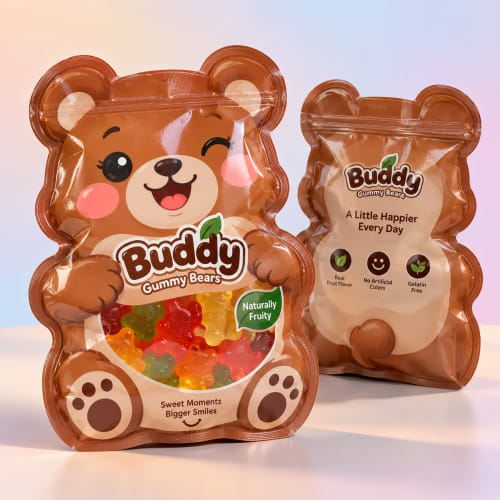
Ready to start your Mylar Food Storage Bags project?
Get a free quote in 24 hours. Our atelier is here to help.