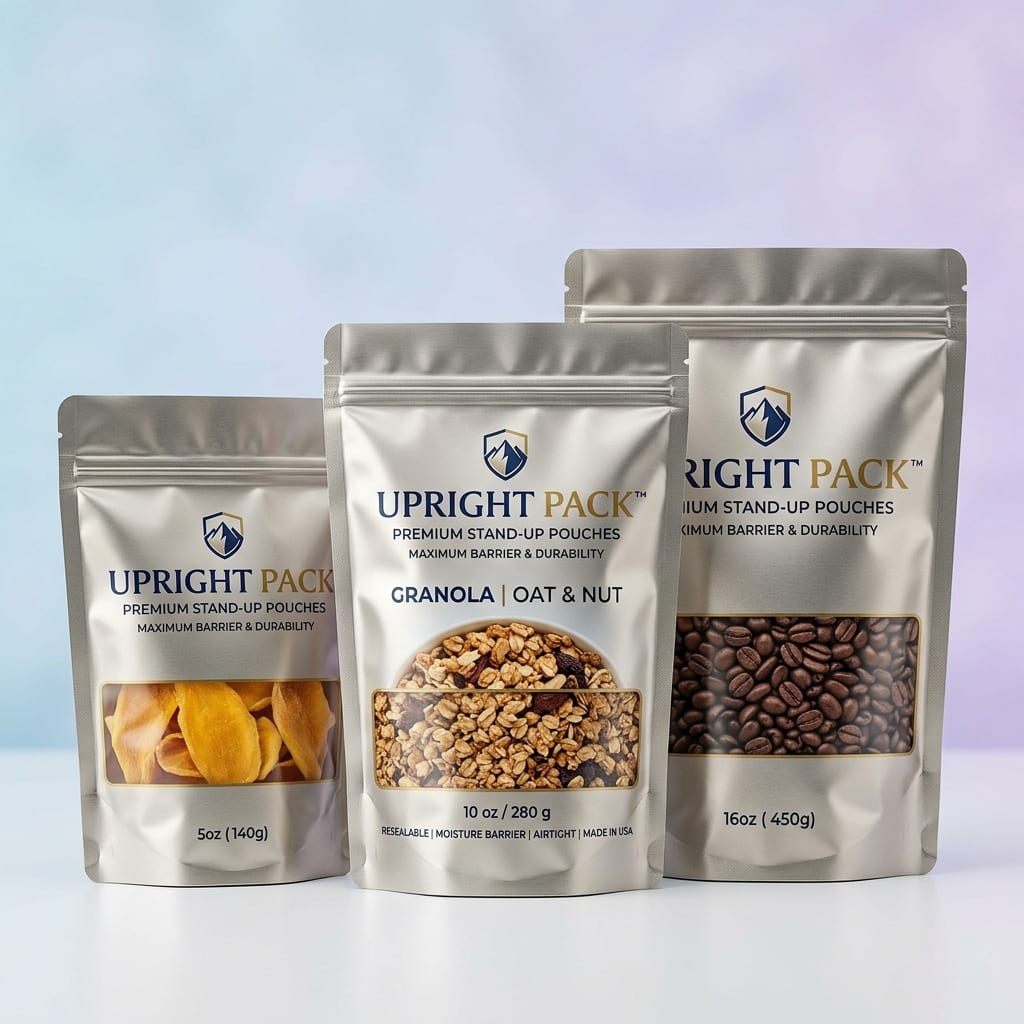
Stand-Up Mylar Bags.
Final price depends on size, material, finish and quantity. Your packaging manager confirms it before production.
Your custom box, quoted.
The full specification book.
Six chapters. Six colours. Click a tab to turn the page.
Stand-Up Mylar Bags
A gusseted base that opens flat, so the bag faces the customer instead of slumping.
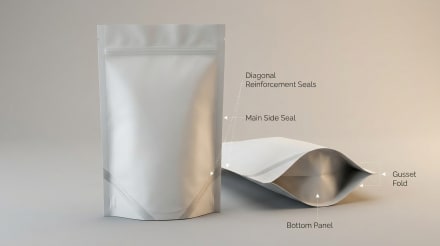
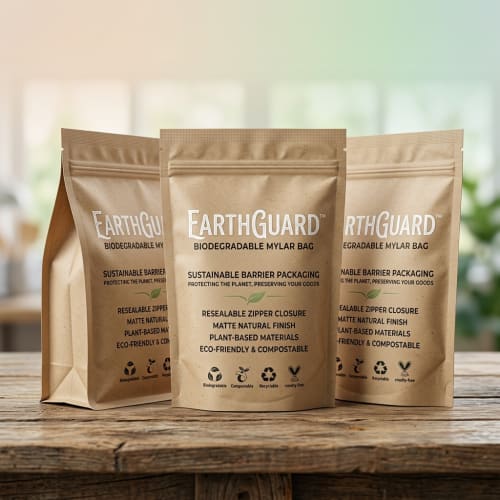
The doypack fold turns a pouch into a shelf-facing pack. It ships and stores flat, expands into a standing base when filled, and gives the front panel to the brand.
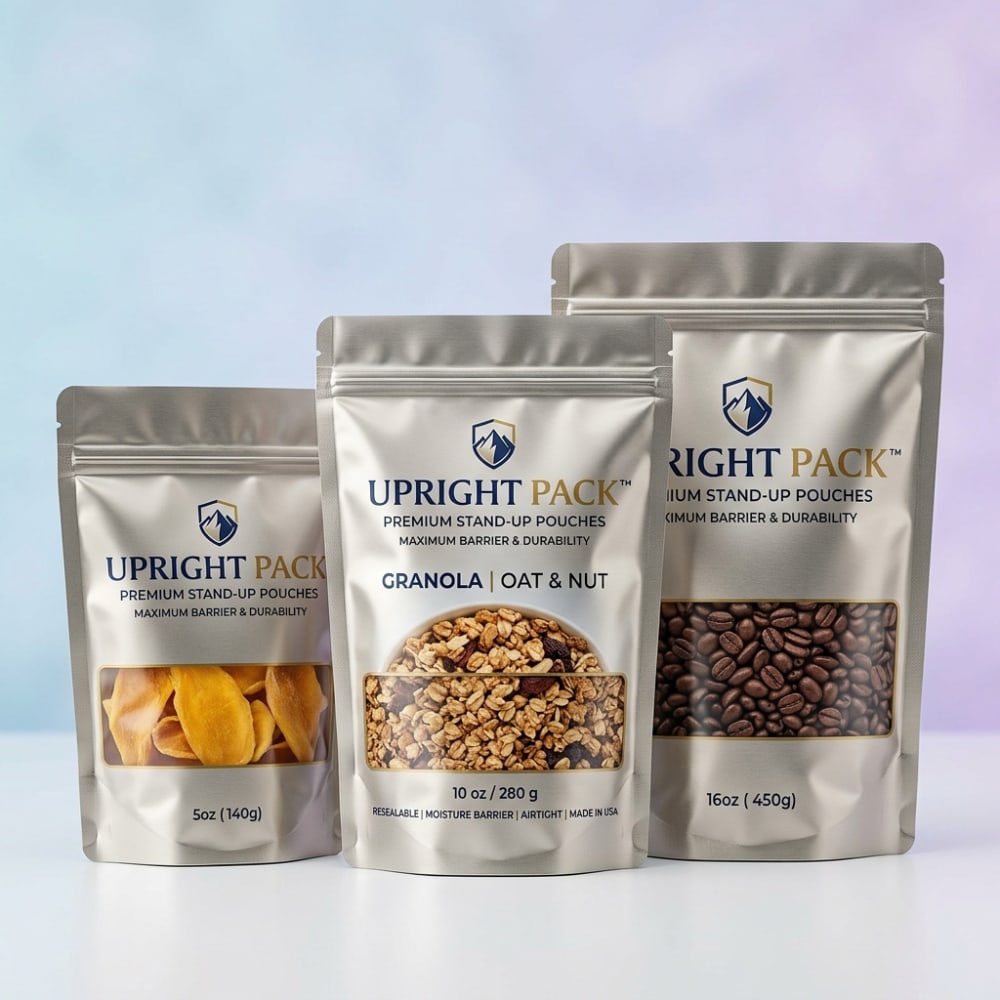
Every detail. Intentional.
The gusset is the shelf presence
It stands square when filled, flat when empty.
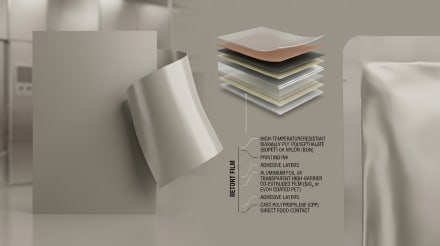
Barrier chosen by contents
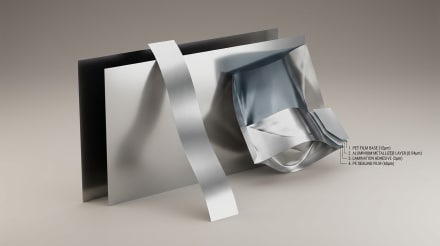
Metallised and foil for oxygen; clear trades shelf life.
Full front panel
The largest brand surface in flexible packaging.
Zipper where it is reopened
Contents used across sessions need a reseal.
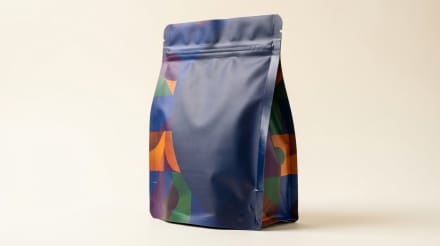
Matte laminates read premium
The register the category settled on.
Tear notch above the zip
First open breaks the seal, not the track.
Built like architecture.
Every order of Stand-Up Mylar Bags is an engineered build, measured, dieline-cut and hand-wrapped to spec. Below is the standard build sheet.
✦ Need a custom spec? Talk to our atelier. Every detail is negotiable.
Every surface, hand-selected.
What this product is built from, and the surfaces it takes. Below the build sheet sits the full swatch library. Every option applies across our range, and a physical swatch set is available on request.
Material
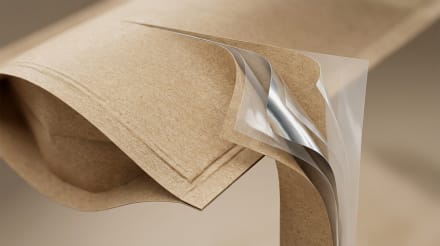
The board and paper your box is built from.
 ◷ FINISH
 ◷ FINISH
 ◷ FINISH
 ◷ FINISH
 ◷ FINISH
 ◷ FINISH
 ◷ FINISH
 ◷ FINISH
 ◷ FINISH
 ◷ FINISH
 ◷ FINISH
 ◷ FINISH
Finishes
How the outer surface looks, feels, and catches light.
 ◷ FINISH
 ◷ FINISH
 ◷ FINISH
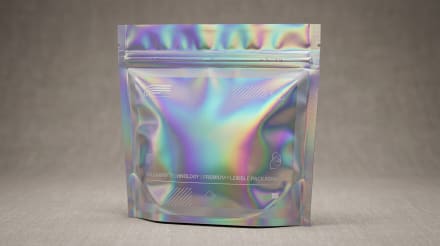 ◷ FINISH
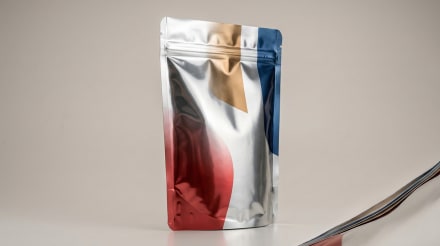 ◷ FINISH
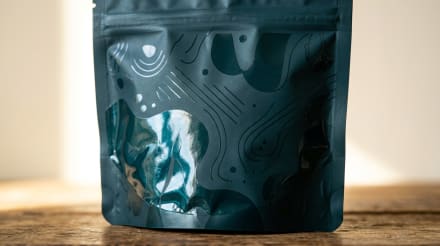 ◷ FINISH
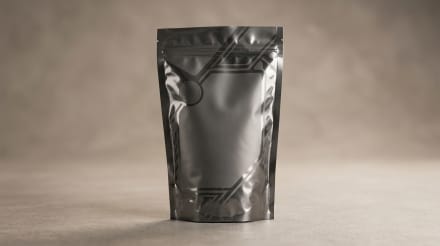 ◷ FINISH
 ◷ FINISH
 ◷ FINISH
 ◷ FINISH
 ◷ FINISH
 ◷ FINISH
Add-ons
Closures, linings, and hardware that complete the build.
 ◷ FINISH
 ◷ FINISH
 ◷ FINISH
 ◷ FINISH
 ◷ FINISH
 ◷ FINISH
 ◷ FINISH
 ◷ FINISH
 ◷ FINISH
 ◷ FINISH
 ◷ FINISH
 ◷ FINISH
 ◷ FINISH
 ◷ FINISH
 ◷ FINISH
 ◷ FINISH
✦ Mix and match across all three and we'll build your exact combination.
The full kit of capabilities.
Sizing & dieline.
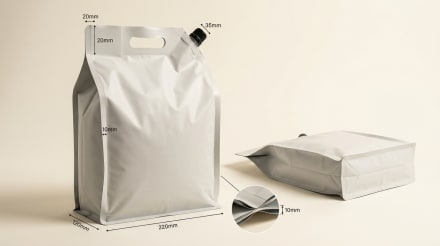
Every Stand-Up Mylar Bags is made to your fill, not pulled off a shelf. A pouch is quoted width × length, plus the gusset that lets it stand. Tell us what goes inside and how much of it, and we return a measured spec, free, before you commit to anything.
A pouch is sized by what goes in it, not by outside dimensions. Give us the fill weight and, if you can, the bulk, since 500 g of granola needs far more bag than 500 g of powder.
We quote width × length, then the bottom gusset depth that sets the footprint. Three figures, and the gusset is the one most often left off.
Zipper or heat seal only, valve or no valve, window or full barrier. These change the film and the bag height, so they belong in the spec rather than added afterwards.
✦ Not sure of your size? Send us the product and we measure it and build the dieline.
Pricing & minimums.
We price Stand-Up Mylar Bags per specification rather than from a fixed list, because the same build in two different finishes can land at very different numbers. Below is what actually moves the price, so you can shape the spec before you request a quote.
The single biggest lever. Unit cost falls sharply as volume rises, because setup and tooling spread across more pieces.
Board weight and stock choice change both the raw material cost and the shipping weight of the finished run.
Foil, spot UV, embossing and soft-touch each add a pass on press. One or two lift the box; five compound the cost.
Full-bleed print inside and out costs more than a one-sided design on natural stock.
Foam, moulded pulp, velvet pillows, magnets and ribbon are priced per piece on top of the box itself.
Standard production is the base rate. Rush moves you up the production queue and carries a surcharge.
✦ Quotes returned within 24 hours.
Questions, answered.
Everything you need to know about Stand-Up Mylar Bags.
The K-seal is the gusset weld that lets the bag open into a flat base and stand when filled. The seal runs in a K shape at each lower corner, locking the gusset to the front and back panels so the base holds square under the weight of the contents. Empty, the whole thing folds flat for shipping and storage.
Heavier fills get a reinforced base film in the gusset area, since that is where the K-seal takes the load.
Around 2 kg is the practical ceiling for a doypack base. Beyond that the gusset bows and the bag leans on the shelf. Film gauge runs 0.10 to 0.20 mm, with 0.12 to 0.14 typical for retail fills, and a thicker gauge helps but does not change the limit much.
For heavier fills we would move you to a quad seal bag, which stands on four sealed corners rather than one gusset.
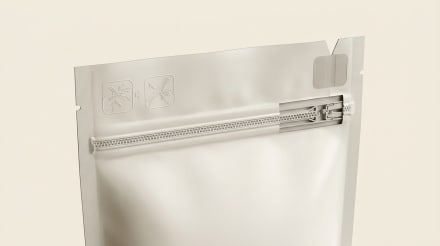
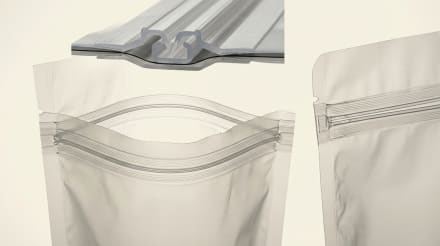
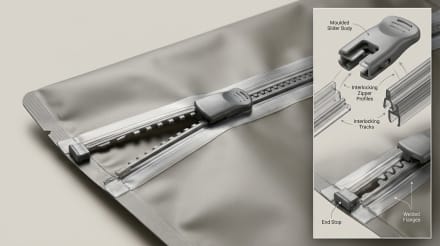
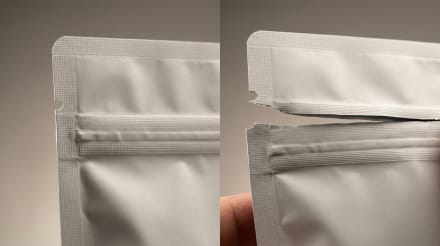
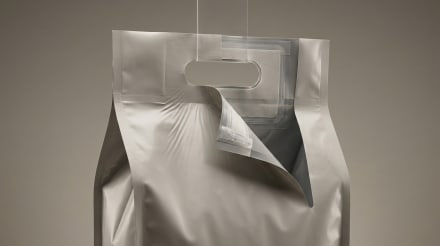
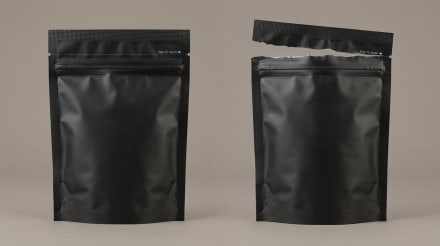
Press-to-close and pull-tab zippers are both available, and a heat-seal-only bag is the option when the contents are used in one sitting. A tear notch sits above the zipper so the first opening breaks the top seal and leaves the track intact. A certified child-resistant zipper can be fitted where the market requires it.
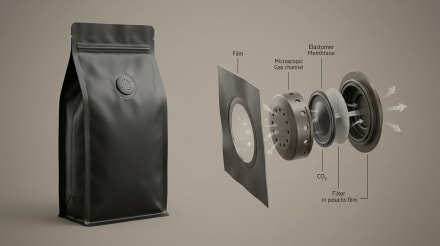
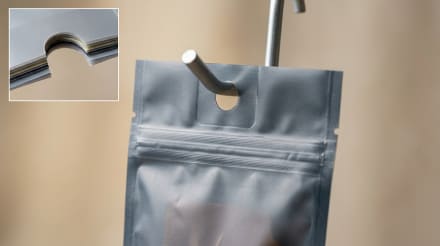
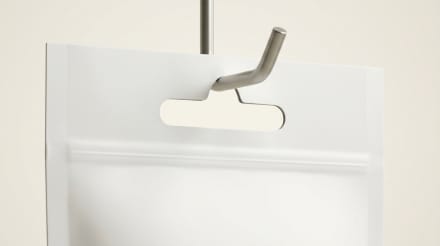
Coffee bags take a one-way degassing valve, and a hang hole can be punched for peg display.
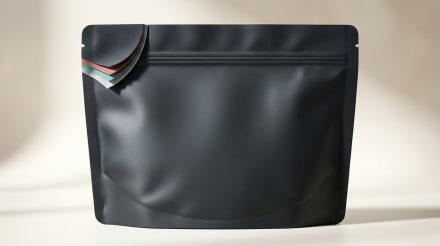
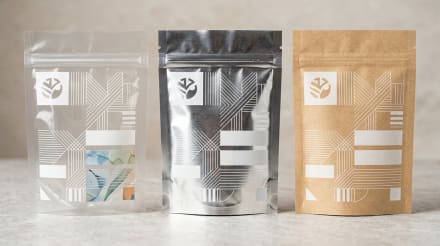
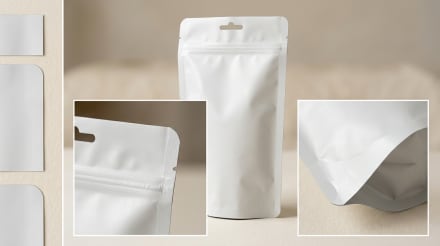
Matte lamination is the most requested finish, and it hides handling marks better than gloss. It reads well in natural, organic and wellness ranges. Gloss gives saturated colour and suits busy mass-retail fixtures where the pack has to shout a little.
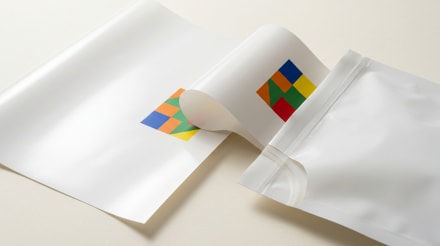
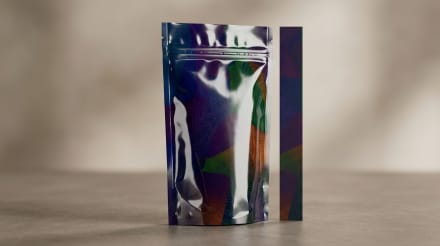
Print is gravure, CMYK plus Pantone, across the front, back and gusset. Soft-touch, spot gloss over matte and a metallic reveal, where unprinted areas show the metallised layer as mirror silver, are the usual upgrades.
The size is given as three figures: width by length plus the gusset depth. Common builds are 5 by 8 inches with a 3 inch gusset and 7 by 10 inches with a 3.5 inch gusset. Stock metric sizes run 10 by 15, 12 by 16, 15 by 25, 20 by 30 and 25 by 35 cm.
Powders pack denser than nuts or freeze-dried pieces, so fill-test a sample with your product. The bag should stand at about 80 percent full without tipping.
Yes, 500 bags is where a custom-printed run begins. Per-unit cost drops noticeably once the order passes 1,000 and again around 2,500, but a first run at the minimum still gives a production-quality batch to test fill, standing and shelf presence on before committing to volume.
The upper end of a single run is 100,000 units.
Standard turnaround is 7 to 10 business days once artwork is approved. A rush slot brings that to 5 to 7 business days. Samples take 5 to 7 business days too, and a filled sample is the only honest way to check that the base stands square.
Whatever the sample costs gets credited against the production run.
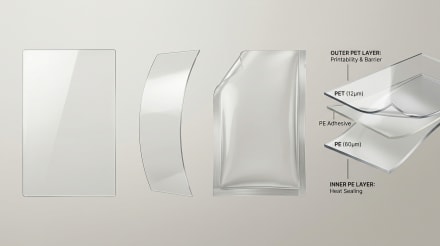
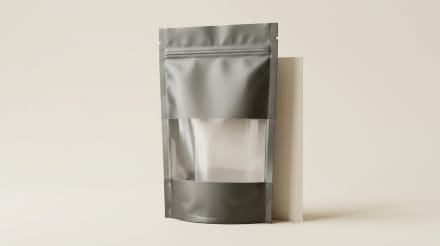
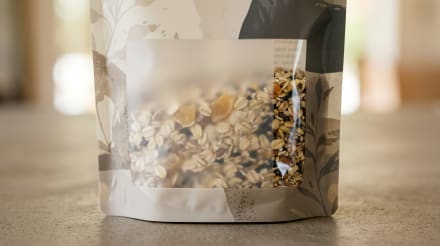
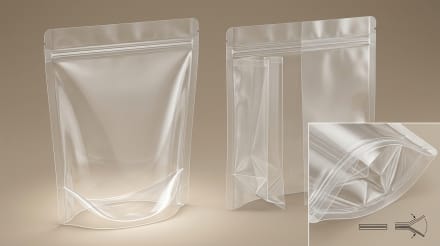
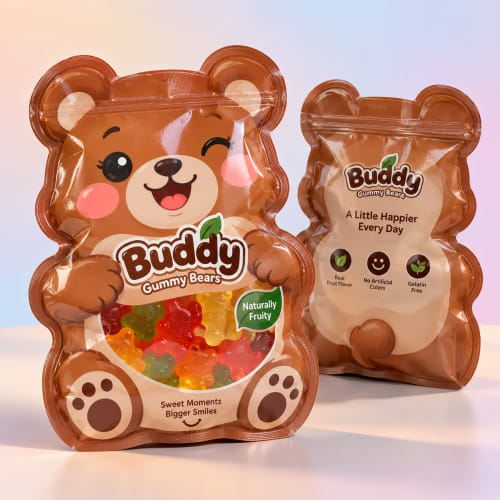
Yes, wherever a window sits, the bag loses its light barrier at that spot. The clear PET panel keeps a reasonable oxygen barrier but lets light through, so a full-front window, an oval, a side strip or a die-cut shape each cost a little shelf life. Coffee beans and snacks generally accept the trade; light-sensitive contents should stay opaque.
If the contents must be seen and shelf life matters, a small strip window on the back panel is the compromise we suggest.
Other products you might love.
Ready to start your Stand-Up Mylar Bags project?
Get a free quote in 24 hours. Our atelier is here to help.